

The Pit Boss 440 Mahogany Series has been living on my patio here in Kansas City for months now, and if you've read my other piece on this grill, you already know the broad strokes: it holds temperature well, it's built solid, and Diane no longer worries about the umbrella catching fire. What I want to get into here is different. This is the stuff that never makes it into the glossy product photos or the five-star Amazon reviews written the first week somebody owns it, the specific annoyances that took me a while to figure out, and which ones are actually worth worrying about versus the ones you fix once and never think about again.
I'm not writing this to talk anybody out of the 440. I'd still buy it again. But thirty-some years of grilling has taught me that the honest review is the one that tells you about the grease bucket, not just the brisket. So this is the unfiltered version, the one I wish somebody had handed me before I unboxed mine, including one afternoon with a jammed auger that had me standing in the driveway more annoyed than I've been at a piece of equipment in a long time.
The Quick Verdict
A capable, honestly priced pellet grill that rewards a little routine maintenance and punishes neglect, with a couple of design quirks that are annoying the first time and forgettable after that.
Amazon Check Today's Price →Thinking about buying one? Read this before you do.
The Pit Boss 440 Mahogany Series is a genuinely good grill, but nobody tells you about the upkeep that comes with it. Check today's price and read on for the parts the shiny product listing leaves out.
Amazon Check Today's Price on Amazon →How I Really Use It, Chores Included
There's a difference between how a grill gets used in the first two weeks, when everything's new and you're excited to fire it up for anybody who'll stand still long enough to eat, and how it actually gets used six months in when it's just another Tuesday and you've got burgers to get on the table before Eli's homework time. My routine settled into something predictable pretty fast. Cook, let it cool, wipe the grates, check the hopper. That part is easy. The part that took longer to learn was everything underneath the grates that the manual mentions once and expects you to remember.
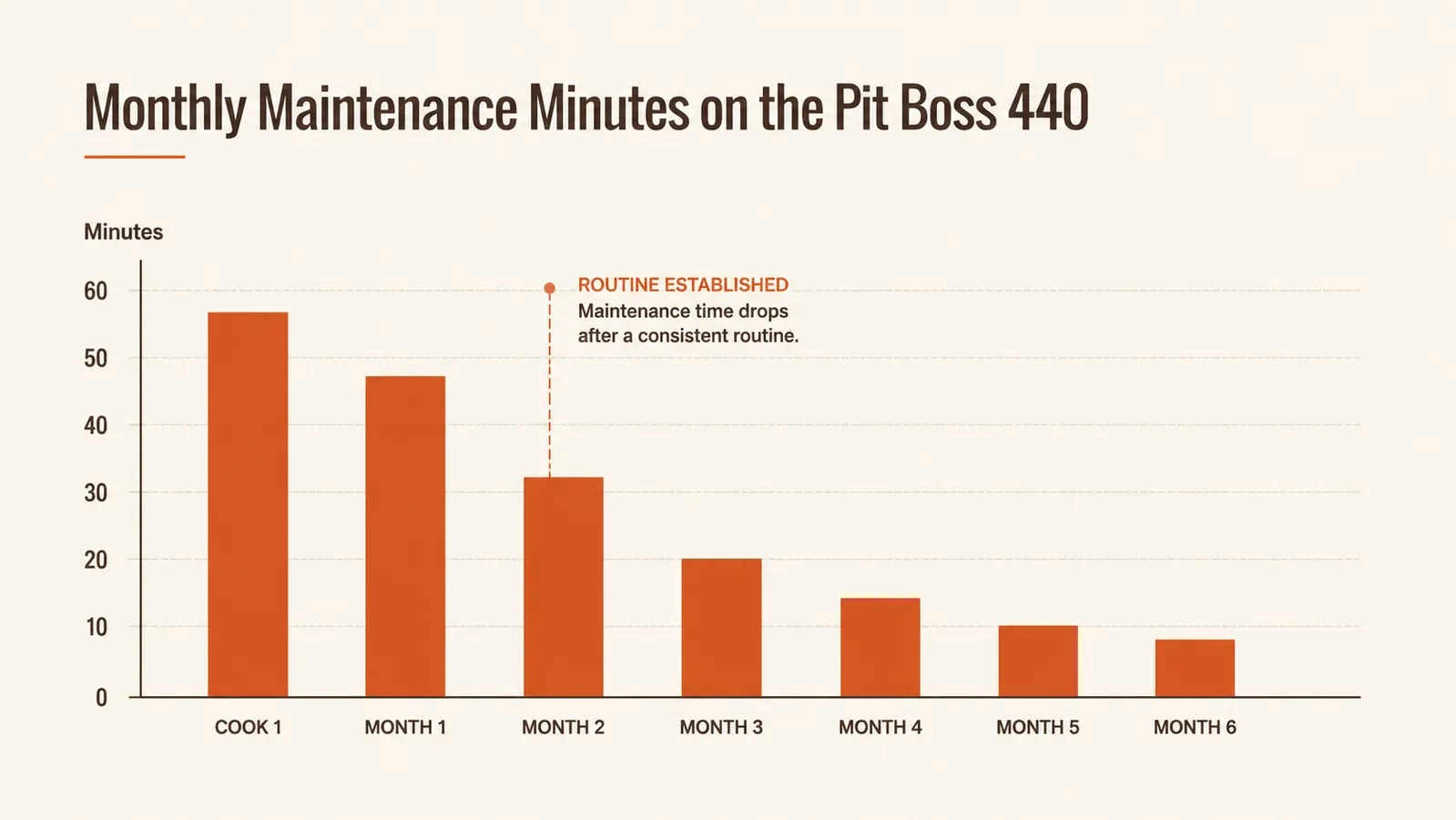
By month two I'd worked out a rhythm: empty the ash from the burn pot every four to five cooks, pull the grease bucket every couple weeks depending on how fatty what I'd cooked was, and vacuum out the bottom of the hopper area once a month with a shop vac to catch pellet dust before it built up. None of that is hard. None of it takes more than fifteen minutes total. But nobody mentioned it to me before I bought the thing, and I went almost three weeks doing zero maintenance because I genuinely didn't know I was supposed to.
That gap in expectations is really what this whole review is about. The grill performs. What surprised me wasn't the cooking, it was realizing a pellet grill is a small machine with moving parts, and machines need upkeep the same way my truck does. Once I built the fifteen-minute routine into my Sunday, everything got easier, but that first month of not knowing cost me some frustration I didn't need to have.
The Ash and Grease Nobody Warns You About
Here's the thing about wood pellets. They burn cleaner than charcoal, but they don't burn clean. Every cook leaves behind a fine gray ash in the burn pot, and if you let it pile up too long it starts affecting airflow, which is part of why some owners online complain about temperature problems that are really just a maintenance problem wearing a different hat. I didn't understand that connection until I read through a Pit Boss owners' forum on a rainy Sunday afternoon and realized half the complaints I was reading were fixable with a shop vac and five minutes.
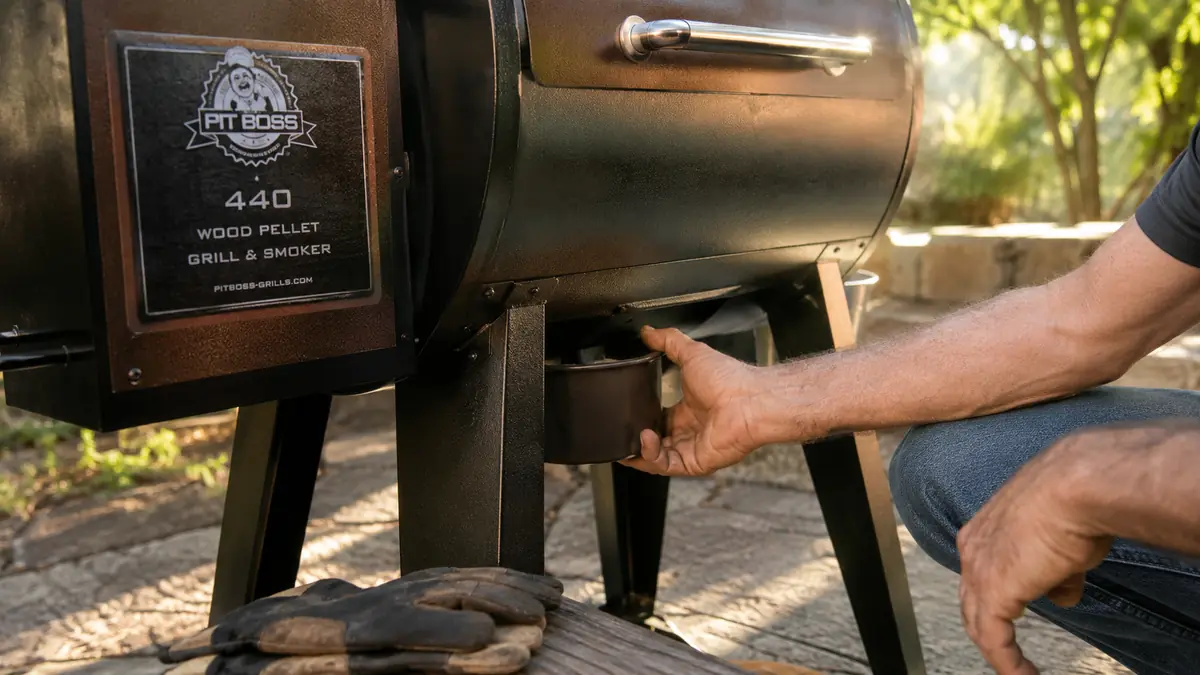
The grease situation is its own thing entirely. There's a small bucket that hangs off the front of the unit to catch drippings, and it fills up faster than you'd guess, especially after anything fatty like pork shoulder or a rack of baby backs with a good amount of marbling. I let it go too long exactly once, during a Fourth of July cookout when I had a dozen people over and wasn't paying attention, and it overflowed onto the patio pavers. Diane was not thrilled about the stain, and I spent the next weekend scrubbing concrete instead of relaxing with a beer.
Since then I check the bucket before every single cook, not after, because it's a lot easier to swap an empty bucket in ten seconds than to deal with an overflow mess later. It's a small thing, but it's exactly the kind of small thing that never shows up in a spec sheet or a five-star headline review, and it's the difference between loving this grill and being mildly annoyed at it every other week.
The Auger Jam That Almost Ruined a Father's Day Cook
I want to tell you about the one afternoon this grill genuinely frustrated me, because I think an honest review needs at least one real story like this instead of a vague mention of 'some hiccups.' It was Father's Day, I had a pork butt going since early morning for a family lunch, and around hour five the auger that feeds pellets from the hopper into the burn pot jammed up. The temperature started dropping steadily, and no amount of checking the app or the controller was going to fix a mechanical jam.
Turned out a couple of pellets had swelled and wedged sideways in the feed tube, something I later learned happens more often with pellets that have picked up a little moisture, even just from humidity in the air on a muggy Kansas City June day. I had to power the unit down, dig out the jammed pellets with a long screwdriver through the hopper opening, and get things moving again, which cost me almost forty-five minutes with company already arriving and a half-cooked pork butt sitting at a temperature I wasn't comfortable with.
We ended up eating about ninety minutes later than planned, and I finished the shoulder on the Weber kettle with some direct heat to speed things along once I got the Pit Boss back on track. Nobody went hungry, and honestly the story's become a running joke with my brother-in-law now, but it was a real reminder that this is a machine with moving parts, and machines jam sometimes. I've since started storing my pellet bag in a sealed container instead of the paper sack it came in, and I haven't had a repeat jam since.
Little Design Choices That Took Getting Used To
There's a priming step built into how this grill starts up, a short cycle where the auger feeds pellets into the pot before ignition even begins, and if you're impatient and open the lid too early or fiddle with the controller during that window, you can end up with an underfed startup that struggles to catch. I did this twice in my first month, both times because I was in a hurry to get cooking and didn't wait for the full startup sequence to finish. Once I learned to just walk away for the first six or seven minutes and let it do its thing, the problem disappeared completely.
The other quirk worth mentioning is that this particular model doesn't have WiFi or an app connection, which some buyers assume every pellet grill comes with these days since it's become common on higher-end models. I didn't miss it much since I'm usually within earshot of the patio anyway, but if you're the type who wants to check your phone from the couch during a long overnight smoke, that's a real limitation worth knowing about before you order, not after.
The hopper lid also sits a little close to where smoke vents out during longer cooks, and I noticed a light film of soot building up on it after several months of use. Wiping it down with a damp rag every few weeks keeps it from looking neglected, but it's another one of those small chores that adds up if you're not expecting them.
What Customer Service Was Actually Like
About four months in, that controller display I mentioned freezing gave me enough concern that I actually called Pit Boss customer service instead of just power cycling it and moving on. I'll be straight with you, the hold time was longer than I wanted, close to twenty minutes on a Saturday afternoon, and the first person I talked to had to transfer me to someone with more technical knowledge of the controller board. That second rep, though, walked me through a proper diagnostic in about ten minutes and confirmed the freeze was a known minor firmware quirk, not a hardware failure, and it hasn't recurred since.
I've dealt with worse customer service on cheaper equipment, and I've dealt with faster on more expensive equipment, so I'd call this middle of the pack. What mattered to me is that nobody tried to talk me into shipping the whole unit back or buying an extended warranty add-on I didn't ask for. They answered my actual question and let me get back to grilling, which is honestly all I wanted out of the call.

What Pellets Actually Cost Me Over a Season
Nobody puts a running cost estimate on the box either, and it's a question I get asked more than almost any other when neighbors see me hauling a bag of pellets in from the truck. Over roughly six months of regular use, everything from quick weeknight cooks to long weekend smokes, I went through a little over 300 pounds of pellets, which works out to around fifteen of the standard 20-pound bags. At the going rate for a decent hardwood blend, that landed somewhere close to a couple hundred dollars for the season, not counting the handful of times I splurged on a specialty flavored pellet for a brisket I wanted to impress people with.
That number surprised me a little, mostly because I'd been comparing it in my head to what I used to spend on propane tanks with my old gas grill, and pellets came out cheaper per cook than I expected once I actually sat down and did the math on a legal pad at the kitchen table. It's not free, and if you're cooking every single day the way some retirees I know do, that cost adds up faster than a marketing page will ever admit. But for a normal weekend-and-a-couple-weeknights kind of griller like me, it never felt like a real strain on the budget.
The one cost surprise that did catch me off guard was replacement parts. I had to order a new igniter rod around month five after the original stopped glowing reliably on startup, a roughly twenty-dollar part that took about ten minutes to swap once it arrived, but it's the kind of expense that never shows up in any review until somebody actually hits it. If you buy this grill expecting the sticker price to be the last dollar you spend on it, adjust that expectation now rather than getting caught off guard down the road like I was.
What We Liked
- Once I built a fifteen-minute maintenance routine, chores became fast and predictable
- Grease bucket and ash pot are easy to access without tools
- Customer service resolved my controller freeze without any upsell pressure
- Priming quirk disappeared entirely once I stopped rushing the startup cycle
- Sealed pellet storage solved the auger jam issue for good
Where It Falls Short
- No WiFi or app connectivity if you want to monitor cooks remotely
- Grease bucket fills faster than expected on fatty cooks and needs checking every time
- One auger jam cost me nearly 45 minutes mid-cook on a day I had guests waiting
- Soot film builds up near the hopper lid on long smokes and needs occasional wiping
- First-time buyers get little upfront guidance on the maintenance routine that actually matters
Nobody puts a photo of the ash bucket on the box. But that fifteen-minute Sunday routine is the real reason this grill has kept working as well six months in as it did the first week.
Who This Is For
This grill is a good fit if you're willing to treat it like the small machine it is, spend fifteen minutes a week on upkeep, and don't need a phone app to feel comfortable walking away from a long smoke. If you're the type who already keeps a routine with your gear, oil changes on schedule, cast iron seasoned regularly, you'll fold this in without much friction and the results will hold up cook after cook.
Who Should Skip It
If you want zero-maintenance cooking or you're the kind of buyer who's going to get frustrated the first time a grease bucket needs emptying mid-party, this might test your patience more than you'd like. And if remote app monitoring is a must-have for you, look at a model built with that feature in mind, because the 440 simply doesn't offer it, no matter how good everything else about it is.
Now you know what nobody else will tell you.
The Pit Boss 440 Mahogany Series is still one I'd buy again, ash bucket, auger jam and all. If the honest picture sounds like a fit for how you cook, check the current listing for today's price and availability.
Amazon Check Today's Price on Amazon →