
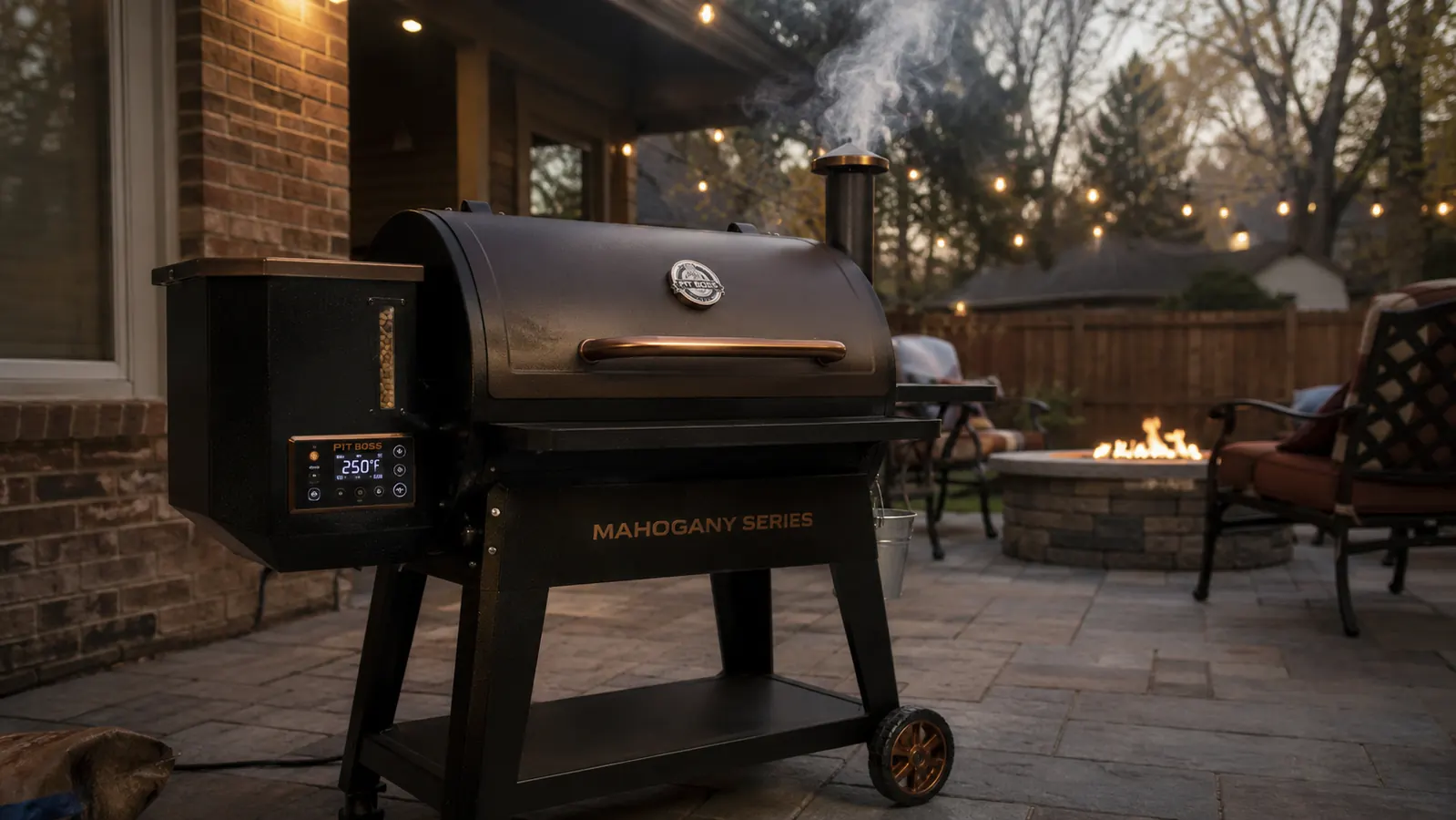
I bought the Pit Boss 440 Mahogany Series last spring after my old propane grill finally rusted through the burner tubes for good. Thirty-some years of grilling here in Kansas City and I'd never owned a pellet grill, mostly out of stubbornness. I figured a machine that fed itself wood pellets and held its own temperature was cheating somehow, like it was doing the part of the job I actually enjoyed. My wife Diane didn't care about my pride, she just wanted a grill that wasn't going to catch the patio umbrella on fire, so we ordered the 440 and I told myself I'd give it one real season before I made up my mind.
A full season later, from that first nervous batch of chicken thighs through a Thanksgiving turkey with my grandson Eli standing next to me checking the digital readout, I've got a real answer on whether the Pit Boss 440 earns its spot on my patio or whether it's just a fancier way to babysit a fire. This isn't a first-week impression written after the honeymoon period. I've run it through ribs, pork butts, brisket, a beer can chicken that didn't survive contact with Eli's appetite, and more weeknight burgers than I can count, alongside my old 22-inch Weber kettle, which I still fire up for anything that wants real charcoal flavor.
The Quick Verdict
A genuinely solid pellet grill that held temperature well through a full Kansas City season of long smokes and quick weeknight cooks, with a hopper big enough for most jobs and build quality that's shrugged off real weather, though the digital controller has a couple of quirks I had to learn to work around.
Amazon Check Today's Price →Tired of babysitting a fire that won't hold steady?
The Pit Boss 440 Mahogany Series set-and-hold temp control, so you can walk away from a long smoke without constantly fussing with vents and coals. Here's the current listing so you can check today's price and availability.
Amazon Check Today's Price on Amazon →How I've Used It
Assembly took me about two hours on a Saturday morning, working alone with a socket wrench and the included instructions, which were clearer than I expected out of a grill box. The legs and hopper bracket gave me the most trouble, mostly because I was trying to hold two panels together with one hand while I fumbled with a bolt, and Diane finally came out to hold things steady while I finished. Once it was together, I seasoned it with a plain burn cycle at 350 degrees for about 45 minutes, the way the manual suggested, and then went straight into that first batch of chicken thighs the same afternoon.
Since then this grill has been my daily driver. I'd guess I've run somewhere north of fifty cooks on it over the season, everything from a quick fifteen-minute burger night when Eli's over after school to an eight-hour pork butt on a Sunday I spent mostly watching a Royals game with Diane instead of standing at the grill. The 518 square inches of cooking space has been enough for a full rack of ribs plus a pan of baked beans side by side, which is about as much as I usually need to cook at once, though I did have to run two batches when I smoked wings for a dozen people over the Fourth of July.
The flame broiler tray underneath the main grate is the feature I didn't fully appreciate until I used it. Sliding it open lets direct flame hit the grate for searing, which I use on steaks a couple times a month when I want a real crust instead of the gentler smoke-roasted finish the pellet grill gives everything by default. It's not a substitute for a hot charcoal sear on the Weber, but it's a nice option to have built into the same machine rather than needing a separate grill for it.
Temperature Control and Hold Through a Kansas City Summer
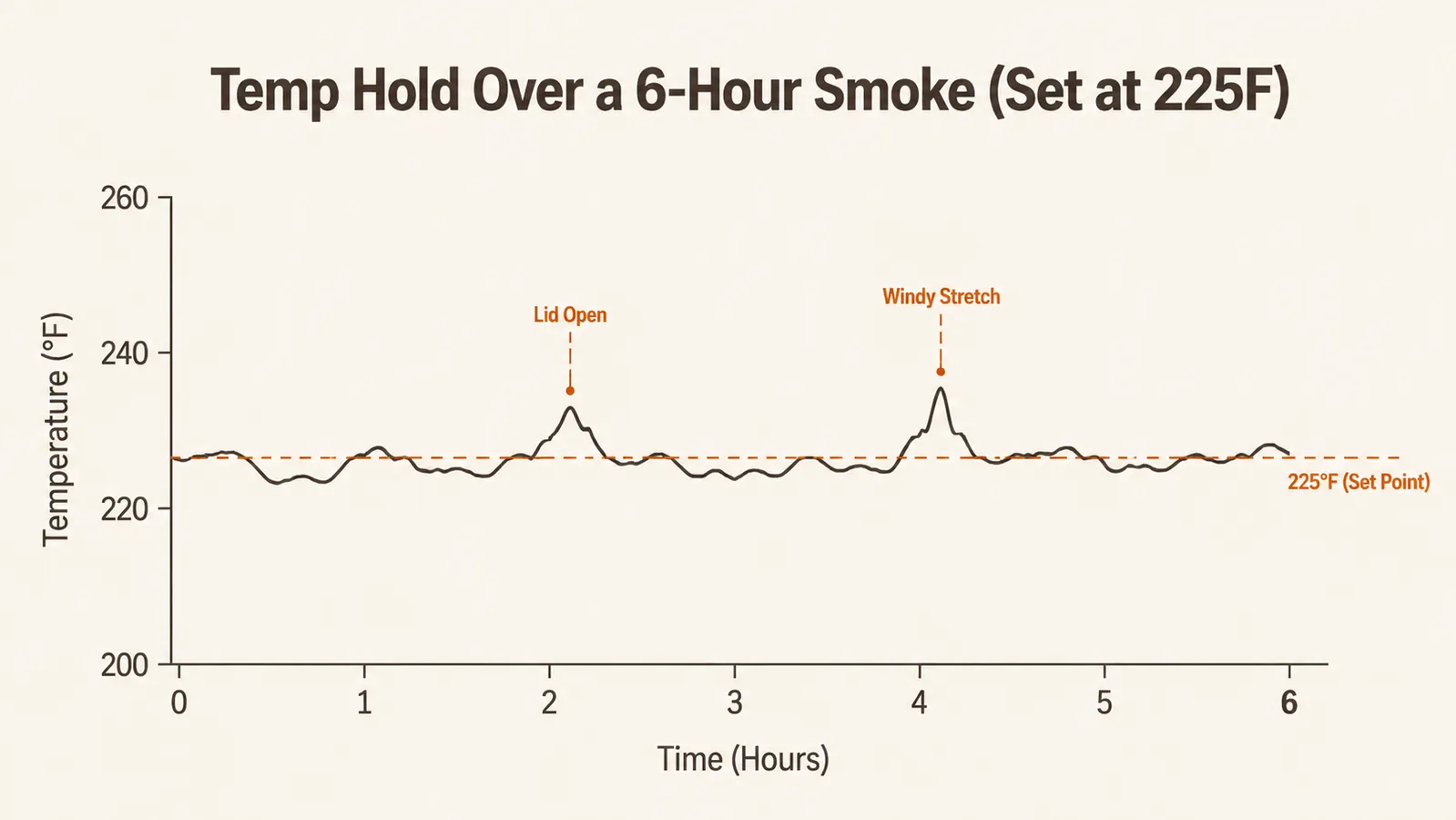
This was my biggest question going in, since I'd heard mixed things about pellet grills struggling to hold steady in real weather, not the mild sunny-day conditions from the marketing photos. Kansas City gave me a fair test over the season, muggy 95-degree afternoons in July and a couple of cold, windy cooks in early spring before the weather really turned. On calm days, the 440 held within about five to eight degrees of my set temp on the digital controller, which is close enough that I never worried about a ruined cook.
Wind is where I saw the real swings. On one particularly gusty April afternoon smoking a pork shoulder, I watched the readout dip as low as 195 when I'd set it at 225, then overcorrect up to 245 before settling back down. It never ruined the meat, and the shoulder still came out tender after about nine hours, but I learned to position the grill against the side of the house on windy days rather than out in the open where it caught every gust off the yard.
The 180 to 500 degree range covers pretty much everything I want to cook. I've smoked ribs low at 225, roasted a whole chicken around 350, and cranked it to 500 for that flame broiler sear on steaks. The one gap I noticed is that it takes a good ten to fifteen minutes to climb from a low smoking temp up to searing range, so if you're planning a reverse sear you need to build that wait into your timing rather than expecting it to jump instantly like a gas burner would.
Hopper Capacity and Pellet Consumption Over a Full Season
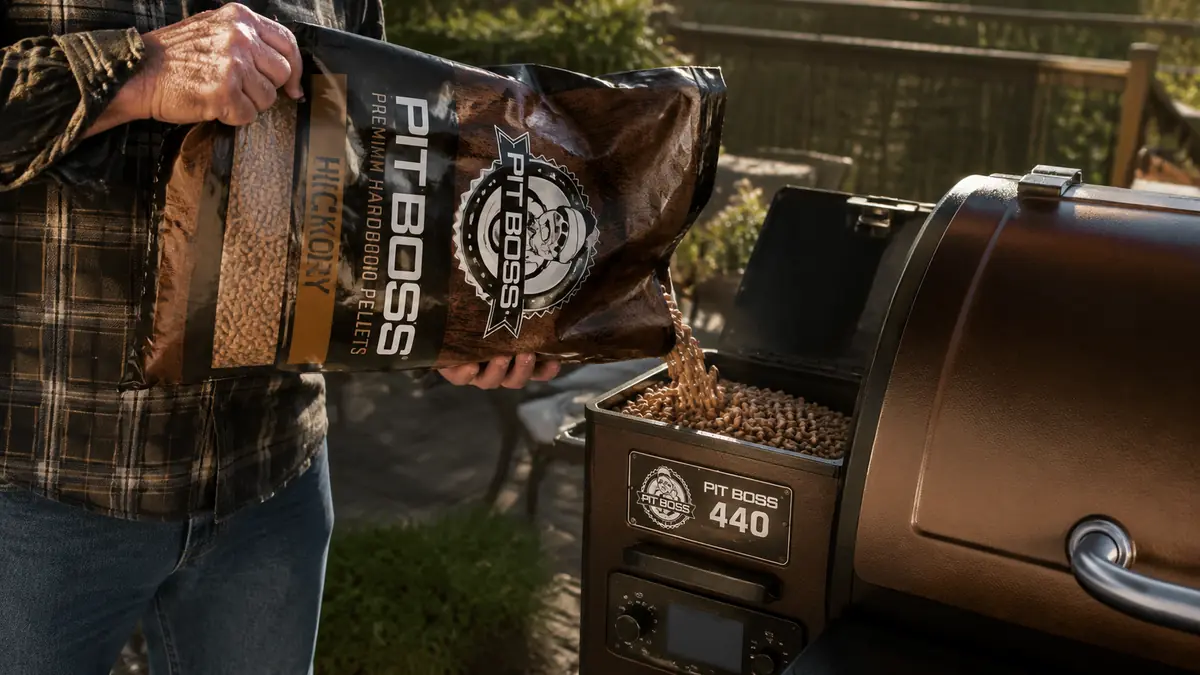
The 5-pound hopper sounded small to me on paper compared to some of the bigger pellet grills I'd read about, and for the longest cooks it does mean paying attention. On a typical low-and-slow smoke around 225 degrees, I've gone through roughly one to one and a half pounds of pellets per hour, which puts a full hopper right around the three to four hour mark before it needs a refill. For an eight-hour pork butt, that means I'm topping it off at least twice during the cook.
That's not a dealbreaker, but it's the one place I'd tell a first-time buyer to adjust their expectations. I keep a full 20-pound bag of pellets sitting next to the grill on cook days now, and checking the hopper level became part of my routine the same way checking a charcoal chimney used to be on the Weber. For quicker cooks, burgers, chicken thighs, a Tuesday night steak, one hopper fill has never come close to running out, so it's really only the long smokes where the smaller hopper size matters.
I did have one cook, a brisket I smoked for a family gathering in late summer, where I let the hopper run lower than I should have and the grill hit a rough patch holding temp for about twenty minutes before I noticed and refilled it. That was on me for not checking sooner, but it's worth knowing the hopper doesn't give you much of a cushion if you get busy talking to guests and forget to glance at it.
Build Quality: What's Held Up and What's Started to Show Wear
The Mahogany Series finish has held up better than I expected sitting outside through a Kansas City summer and the start of a Midwest fall. I keep it covered when it's not in use, which I think matters more than people give it credit for, but even on the days it's sat uncovered overnight I haven't seen any rust bubbling up on the main body. The hinges on the lid still close snug with no rattle, and the wheels roll smooth enough that I can move it a few feet to sweep underneath without much effort.
The one spot showing real wear is the porcelain-coated grates, which have a couple of small chips near the edges where I've scraped them harder than I probably should with a metal brush. That's likely more on my technique than the grill's fault, since I've been a little rough with grates for thirty years out of habit from cast iron grills that could take the abuse. I switched to a nylon-bristle brush about halfway through the season and the chipping stopped, so that's a lesson worth passing along rather than a real complaint about the grill itself.
The LED digital controller has worked reliably all season, though I did have one hiccup in late summer where the display froze mid-cook and I had to power the unit off and back on to get it responding again. It picked right back up where it left off with no damage to the cook, a rack of ribs that turned out fine, but it was the one moment all season that gave me pause about the electronics.
What I Considered Before This One
Before buying the 440, I looked hard at a couple of Traeger models a buddy of mine swears by, and I'll be honest, they're excellent grills. What kept me on the Pit Boss side was mostly price for the cooking space you get, since the 440's 518 square inches came in noticeably below what I'd have paid for a similarly sized Traeger. I also considered just sticking with charcoal full time and skipping pellets altogether, but at 61 with a knee that doesn't love standing over coals for eight hours, the idea of setting a temperature and walking away won out.
I didn't get rid of my Weber kettle, and I don't think anyone should treat a pellet grill as a full replacement for real charcoal cooking. The 440 has become my go-to for anything long or unattended, pork shoulders, ribs, a Thanksgiving turkey with the family coming over, while the Weber still comes out when I want that harder charcoal char on a quick weeknight steak or when Eli wants to help me build a fire the old-fashioned way. Having both has covered every kind of cook I do over a season better than either one alone would have.
What We Liked
- Held within five to eight degrees of set temp on calm days across a full season
- 518 square inches handled a full rack of ribs plus a side pan without crowding
- Flame broiler tray added real searing ability without needing a second grill
- Mahogany finish shrugged off a humid Kansas City summer with no rust
- Priced noticeably below comparable Traeger models for similar cooking space
- Wheels and hinges still moved smooth after fifty-plus cooks
Where It Falls Short
- Wind caused temp swings of up to 30 degrees on gusty days
- 5-pound hopper needs refilling roughly every three to four hours on long smokes
- Porcelain grates chipped slightly until I switched away from a metal brush
- Digital controller froze once mid-cook and needed a power cycle to reset
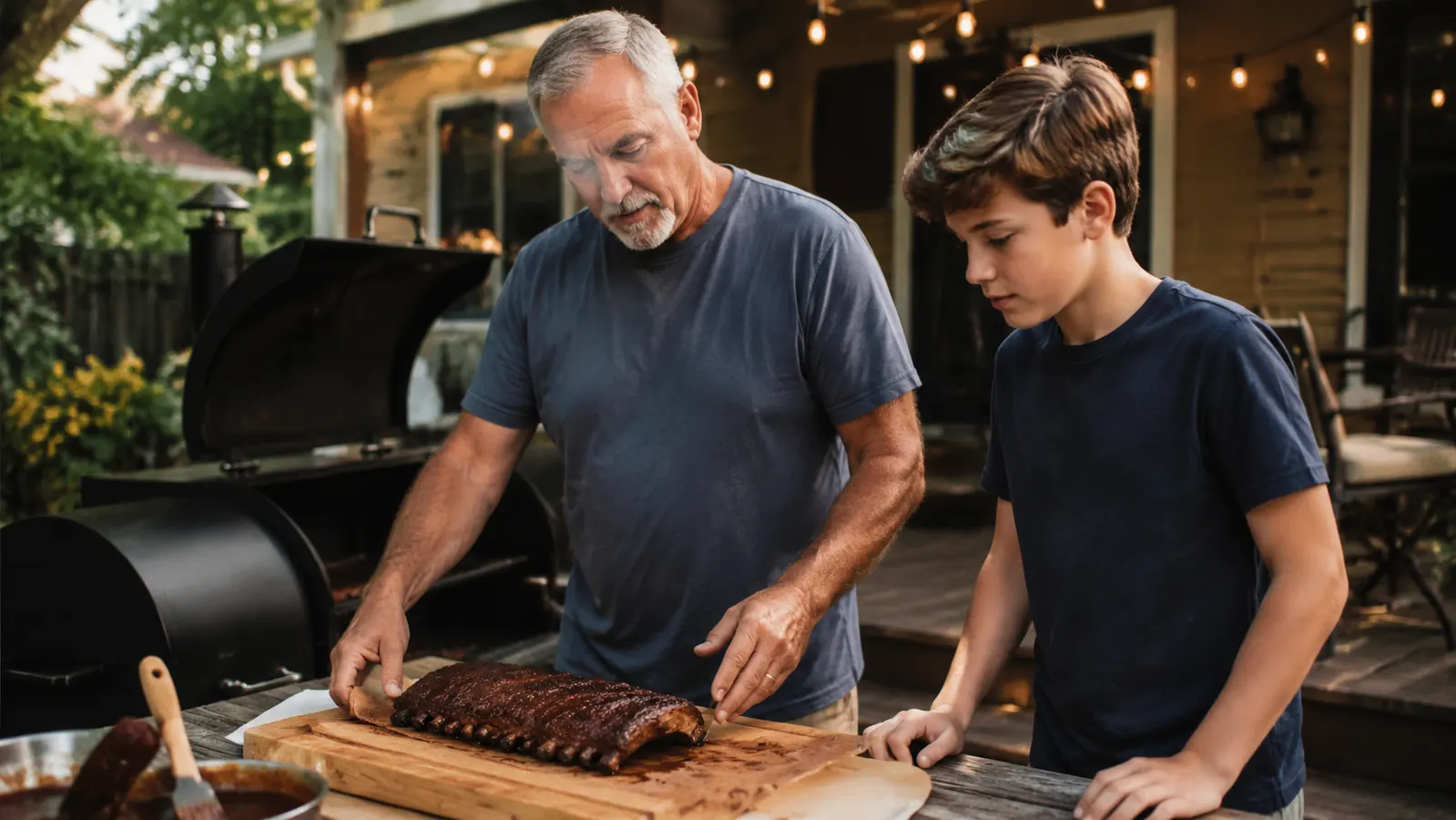
Eli thought watching the countdown on the controller was the coolest part of Thanksgiving. I thought it was finally getting to sit down with Diane instead of standing over a fire for four hours.
Who This Is For
If you do a lot of long, low-and-slow cooks and you're tired of babysitting a fire every twenty minutes, this grill genuinely solves that problem. It's also a smart pick if you want one machine that can smoke a pork shoulder on Sunday and sear a couple of steaks on a Tuesday without switching equipment. Anyone weighing a Traeger against their budget should give the 440 a real look, since the cooking space and temp control have kept up with everything I've thrown at it this season.
Who Should Skip It
If your patio sits somewhere consistently windy, or you're planning marathon overnight briskets and don't want to wake up to refill the hopper twice, look at a model with a larger hopper before you commit to this one. And if what you really love is the char and smell of real charcoal, a pellet grill of any brand is going to feel like a different tool, not a replacement, the same way it's been for me alongside my Weber kettle.
A full season in, this is still the grill I light first.
If you're done babysitting a fire that won't hold steady, the Pit Boss 440 Mahogany Series gives you set-and-hold temp control with room to sear when you want it. Check the current listing for today's price and availability.
Amazon Check Today's Price on Amazon →