
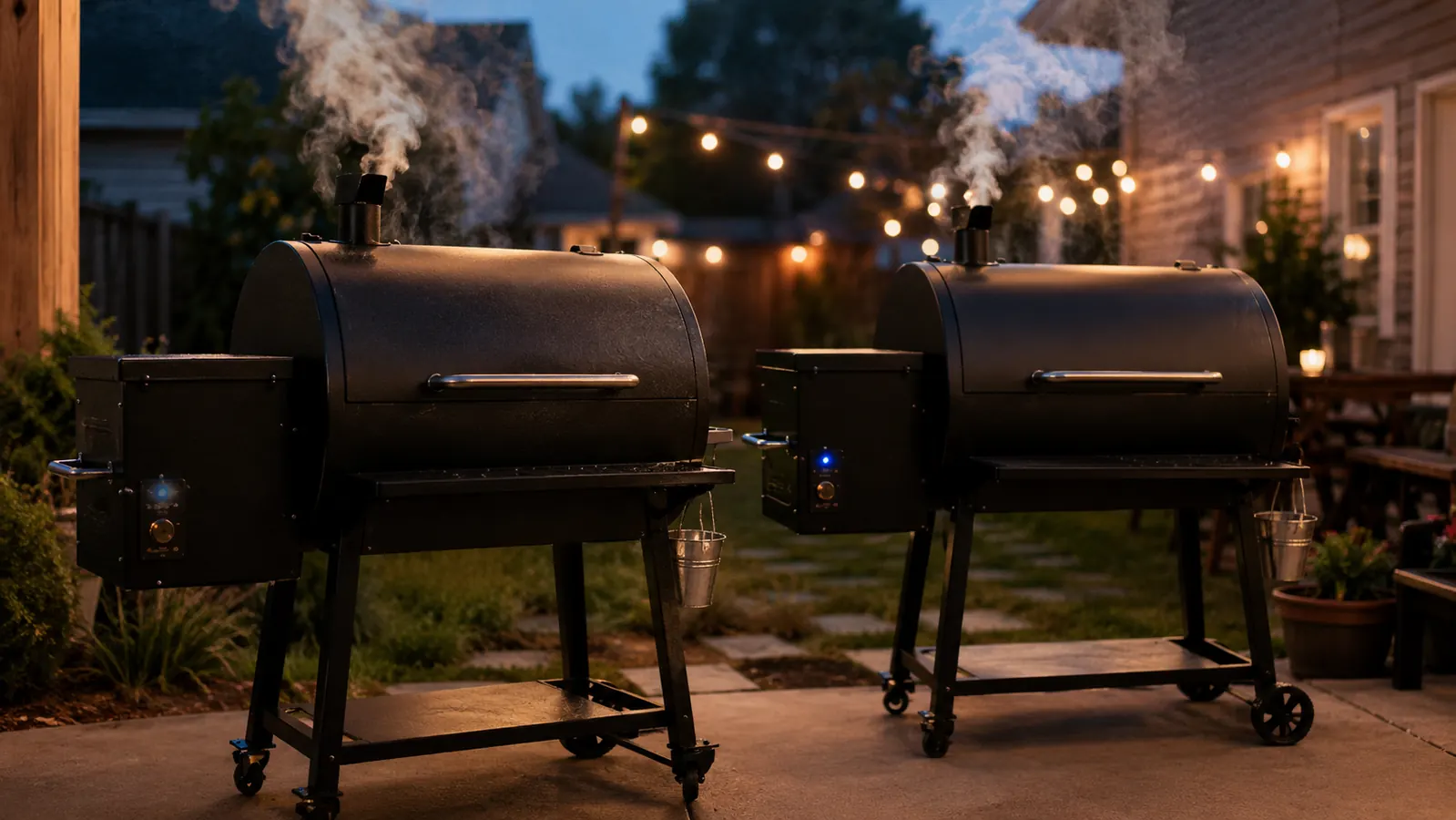
Short answer, since I know most of you are standing in your driveway with a phone out trying to decide before the sale ends: the Pit Boss 440 Mahogany Series gets you nearly the same cook quality as a Traeger Pro 575 for a good chunk less money, and for a guy who just wants to smoke a brisket on Saturday and not think about it, that gap is hard to ignore. If you want app control off your phone from the office, or you've already got other Traeger gear and like staying in one ecosystem, that's a real reason to spend more, and I'm not going to pretend otherwise.
I bought the Pit Boss 440 for my own patio here in the Kansas City suburbs a little over a year ago, and my neighbor two houses down runs a Traeger Pro 575 he's had about as long. We've done side by side cooks more times than Diane probably wanted us to, same brisket, same rack of St. Louis ribs, cooked at the same time on both grills, just to settle the argument once and for all. Here's what actually separated them, not what the box copy says. I've also spent a couple of afternoons on a buddy's older Traeger Pro at a lake house near Lake of the Ozarks, so this isn't a one-cook impression, it's a season's worth of watching both grills handle wind, rain, and a January cold snap that dropped into the teens.
| Pit Boss 440 | Traeger | |
|---|---|---|
| Price (approx., today's price) | Around $410, Pit Boss 440 Mahogany Series | Around $800 to $900, Traeger Pro 575 |
| Cooking Space | 518 sq. in. total cooking area | 575 sq. in. total cooking area |
| Temperature Range | 180°F to 500°F | 165°F to 500°F |
| Pellet Hopper Capacity | 5 lb. hopper, needs more frequent refills on long cooks | 18 lb. hopper, can run most of a full day without a refill |
| App / WiFi Control | No built-in WiFi, LED digital controller set manually at the grill | Traeger WiFire app, full remote temp control and alerts from your phone |
| Build | Steel body, mahogany-finish powder-coated lid, flame broiler slide plate for direct-flame searing | Steel body, standard powder-coated finish, no built-in direct-flame slide plate on this model |
| Ignition / Startup | Hot rod igniter, roughly 10 to 12 minutes to temp | Induction fan igniter, roughly 10 to 15 minutes to temp |
| Pellet Sensor / Low-Pellet Alert | No, you check the hopper by eye | Yes, app sends a low-pellet alert |
| Price Per Square Inch of Cooking Space | About $0.79 per sq. in. | About $1.48 per sq. in. |
Where the Pit Boss 440 Wins
Money is the first and most honest answer. The Pit Boss 440 runs about half of what my neighbor put into his Traeger Pro 575, and once you're both standing over cooked meat, the difference in the eating is nowhere near that dramatic. I've served brisket off my Pit Boss to a table full of guys who couldn't tell which grill it came off of, and one of them owns a Traeger himself. If your budget is the deciding factor, and for most weekend cooks it is, the Pit Boss frees up real money for the stuff that actually improves a cook, a good instant-read thermometer, better wood pellets, or just not stressing about the credit card statement.
The flame broiler slide plate is the other thing I lean on that my neighbor's Traeger doesn't have on his model. Slide the plate open and you get direct flame contact for searing a steak, which the Pit Boss handles noticeably better than any Traeger I've cooked on, since most Traeger models rely entirely on indirect heat off the drip pan. I've seared a couple of ribeyes on the Pit Boss with a real crust that I couldn't get off his Traeger without finishing them on a cast iron skillet inside. If you like a mix of low-and-slow smoking and the occasional hot-and-fast steak night, that slide plate earns its keep.
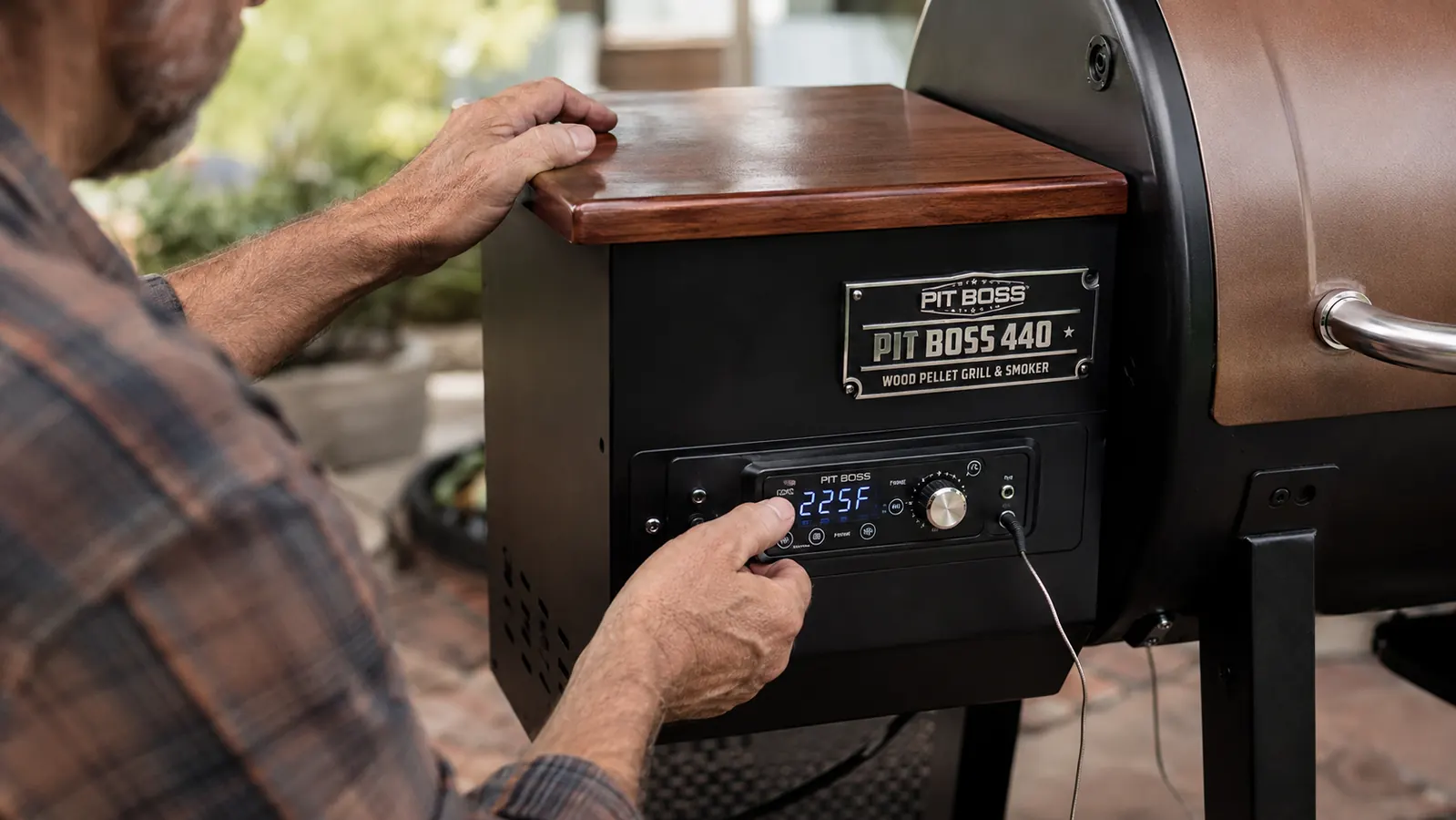
Startup and simplicity are underrated too. The LED digital controller on the Pit Boss is dead simple, punch in your temp, hit start, and the hot rod igniter has it smoking within 10 to 12 minutes most mornings, even in a Missouri cold snap. There's no app to update, no WiFi password to re-enter after a router reset, which has happened to me with smart-home gadgets more times than I want to admit. For a guy who just wants to walk out, set the temp, and go back inside, the lack of an app isn't a downside, it's one less thing that can go wrong on a Saturday morning.
Where the Traeger Wins
I'd be lying if I said the WiFire app isn't genuinely useful. My neighbor checks his Traeger's temp from his phone at his kid's soccer game, gets an alert if the pellet hopper is running low, and can nudge the setpoint up or down without walking outside. That kind of remote control matters if you're doing a 14-hour brisket overnight and don't want to set an alarm every two hours to physically check the hopper. The Pit Boss 440 has no WiFi at all, so if you want that phone-in-your-pocket peace of mind, Traeger is simply the better tool for it right now.
The bigger hopper is the other real advantage. Traeger's 18 lb. hopper on the Pro 575 will carry you through most all-day cooks without a refill, where the Pit Boss 440's smaller 5 lb. hopper means I'm topping mine off partway through a long brisket or pork shoulder cook. It's not a dealbreaker, I keep a bag of pellets sitting right next to the grill and it takes thirty seconds to refill, but if you hate any interruption during an overnight smoke, that's a legitimate edge for the Traeger. Add in the low-pellet sensor that pings your phone before you run dry, and it's a more hands-off system end to end, which is exactly what you're paying the extra money for.
Want most of that Traeger cook quality without paying Traeger money?
The Pit Boss 440 Mahogany Series gets you 518 sq. in. of cooking space, a flame broiler for real searing, and steady 180 to 500°F control at close to half the price of a comparable Traeger.
Amazon Check Today's Price on Amazon →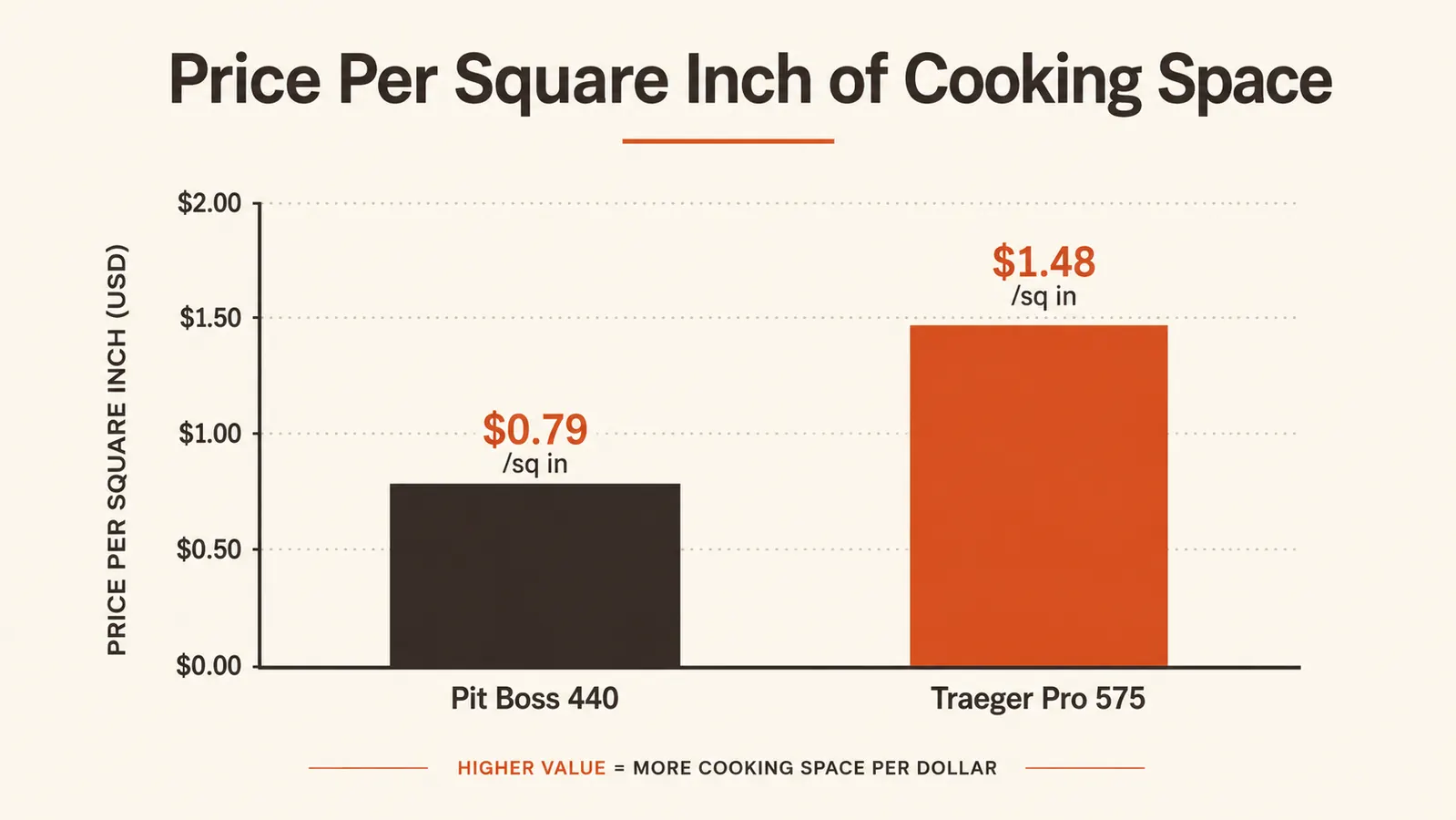
Cooking Space and What It Actually Means on Grate
On paper the Traeger Pro 575 edges out the Pit Boss 440 by 57 square inches of total cooking area, but that number includes both the main grate and the smaller upper warming rack, and the gap on the main cooking surface is smaller than the spec sheet makes it look. I've fit two full racks of St. Louis ribs plus a pork butt on the Pit Boss 440's main grate at once, with room left for a pan of beans underneath on the flame broiler side. Unless you're regularly cooking for a full backyard crowd or running a competition-style spread, 518 square inches covers a family cookout without anyone squeezing food onto the warming rack.
Where the extra space starts to matter is exactly the situation most weekend cooks don't hit very often, three or four big cuts going at once for a holiday crowd. If that's your regular reality, the Traeger's extra room, plus its slightly larger 575 model options going up from there, might be worth chasing. For the Sunday-afternoon cook for the family, or even a Fourth of July spread for a dozen people, I've never once run out of room on the 440.
App Control and the Real-World Difference
I want to be fair here because I know some readers are going to weigh this heavier than I do. If you travel for work, or you're the type who wants to babysit a brisket from your office desk, the WiFire app is a legitimate reason to pay Traeger's price. It's a mature, reliable piece of software, my neighbor's never had it drop connection mid-cook, and the alerts genuinely work as advertised.
But here's what I've noticed after a year without it. The Pit Boss's LED controller holds a setpoint just as steady as the Traeger does once it's dialed in, usually within about 10 to 15 degrees either direction on a calm day, similar swings to what I see on my neighbor's Traeger in windy conditions. The app doesn't make the meat cook better, it makes checking on it more convenient. If you're the kind of cook who's usually within shouting distance of the backyard anyway, mowing the lawn, tossing a ball with Eli, sitting on the porch with Diane, you're not losing much by walking twenty feet to glance at a digital readout instead of pulling out your phone.
The Traeger app tells you what's happening on the grill. The Pit Boss just costs less to find out the same thing by walking outside.
Build Quality After a Season of Kansas Weather
Both grills are steel-bodied, and both hold up fine under a cover, but the finishes wear differently. The Pit Boss 440's mahogany-finish powder coat has taken a Missouri summer of humidity and a January cold snap without bubbling or fading, though I keep it under a fitted cover between cooks the same way I would any pellet grill. The hinges on the lid are a little looser than they were the first month, nothing that affects the seal, but you notice it when you slam it shut in a hurry. The grease management is straightforward, a bucket hangs off the front, and I dump it every three or four cooks without much mess.
My buddy's Traeger Pro at the lake house has a similar story, the powder coat has held up well, and the auger system that feeds pellets from the hopper has never jammed on him, which is the one failure point people online worry about most with any pellet grill. Where his Traeger pulls ahead is the drip management, the design channels grease more consistently away from the fire pot, so he's had fewer flare-ups than I have when I let the Pit Boss's grease bucket go a cook too long. It's a small thing, but if you're the type who forgets maintenance until something smokes wrong, that extra margin in the Traeger's design is worth knowing about.
Who Should Buy Which
If you're a weekend griller who wants a real step up from charcoal, cooks for family more than for crowds, and would rather put the money saved toward a good spice rub collection or a second grill grate, the Pit Boss 440 is the smarter buy. It sears just fine, it smokes low and slow, and it holds temp reliably enough that I've stopped thinking about the temperature swings entirely after the first few cooks. You're not sacrificing the actual cook quality to save the money, you're sacrificing convenience features that a lot of backyard cooks never end up using anyway.
If remote app control matters to your lifestyle, if you're already running other Traeger gear you want to keep talking to the same app, or if you regularly cook for bigger crowds and want that extra hopper capacity and cooking room, the Traeger earns its higher price. Nobody who buys one is making a bad decision, they're just paying for a different set of priorities than the ones I care most about. For my money, and for most guys I talk to leaning over the fence with a beer in hand, the Pit Boss 440 gets the cook done just as well for a lot less, and that's the comparison that matters most once the smoke clears.
Ready to smoke your first brisket without spending Traeger money?
The Pit Boss 440 Mahogany Series gave me nearly the same results as my neighbor's Traeger Pro 575, at roughly half the price. See today's price and specs on Amazon.
Amazon Check Today's Price on Amazon →