
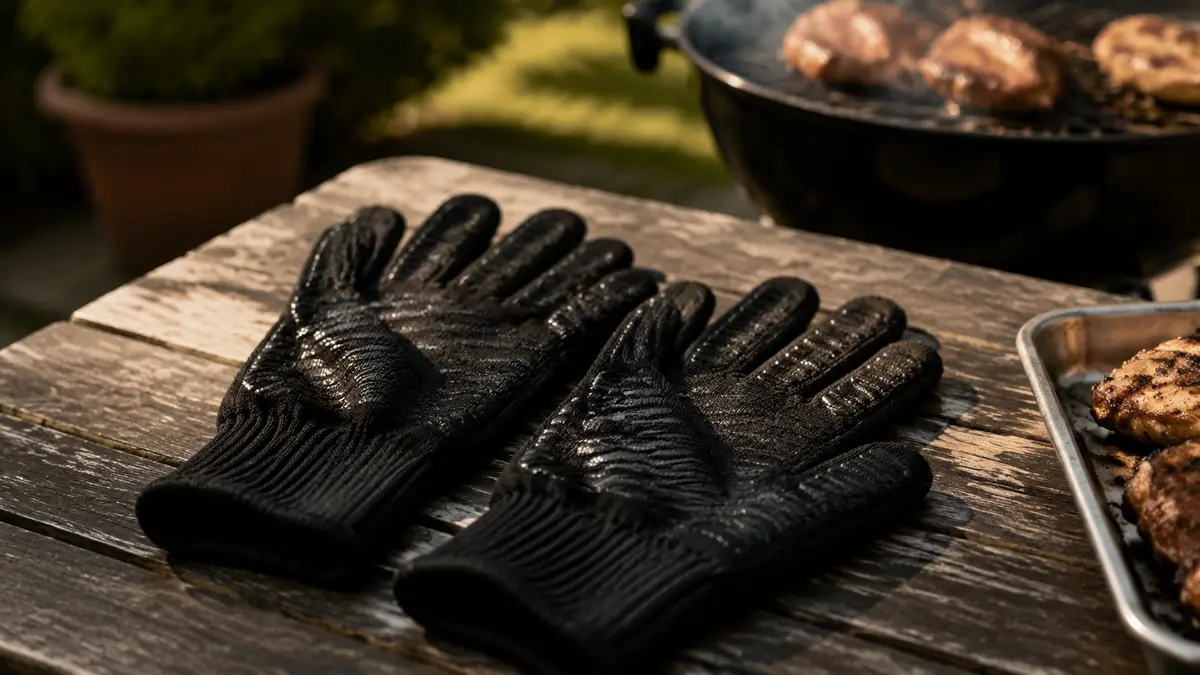
I already wrote one review of these RAPICCA gloves after a full grilling season, and it was a fair one, but a few readers wrote in asking pointed questions that a tidy five-star writeup tends to skip over. Do these actually fit a big hand, or do they just look big on the packaging? Are they really waterproof, or is that just a word on the label? And where does a glove like this actually start to fail first, because every glove fails somewhere eventually. So this is the version I'd give a buddy at the hardware store if he grabbed my arm and asked me straight up whether he should spend his money on the RAPICCA 932°F gloves or walk past them.
I wear a men's large in most work gloves, and Diane wears a medium in hers, so between the two of us we've had these gloves on four different sized hands over the past several months, mine, hers, my brother-in-law's, and even Eli tried a pair on for laughs before deciding they went halfway up his arm. That range is where the honest answers start to show up, because a glove that fits me fine might be a completely different experience for someone with smaller hands or someone who genuinely needs the extra room these claim to have.
The Quick Verdict
Genuinely tough and heat-capable gloves, but the one-size-fits-most XL fit runs loose for smaller hands, the waterproof claim has real limits, and the seams show wear in a spot most reviews never mention.
Amazon Check Today's Price →Before you buy a pair of grill gloves off a five-star average, get the fit and wear-point details first.
The RAPICCA gloves are rated to 932°F and run a 14-inch XL length, but sizing and long-term wear matter more than the heat rating alone. Here's the current listing so you can check today's price, size chart, and availability for yourself.
Amazon Check Today's Price on Amazon →How I'm Testing These Differently This Time
For this review I wasn't just tracking whether the gloves survived a hot skillet or a rack of ribs, since I'd already answered that question the first time around. This time I paid attention to the stuff that only shows up when you stop being impressed by the newness of a product and start living with it the way you'd live with a pair of work boots, sizing quirks, smell, how it holds up to being hosed off in the driveway instead of just caught in a passing rain shower, and exactly which stitch line gives first.
I also asked around at a chili cook-off Diane and I judged back in April, since half the cooks there had some version of a heat-resistant glove on their hands. A few of them owned the RAPICCA gloves too, and hearing three or four other people's complaints and praise side by side told me more about consistency across different hands and different uses than my own pair ever could on its own.
None of what follows is meant to talk you out of buying these. I still own mine and still use them. But if you're the kind of buyer who reads past the star rating looking for the catch, this is where I lay it out plainly instead of burying it in a pros and cons list at the bottom.
The Fit Nobody Warns You About
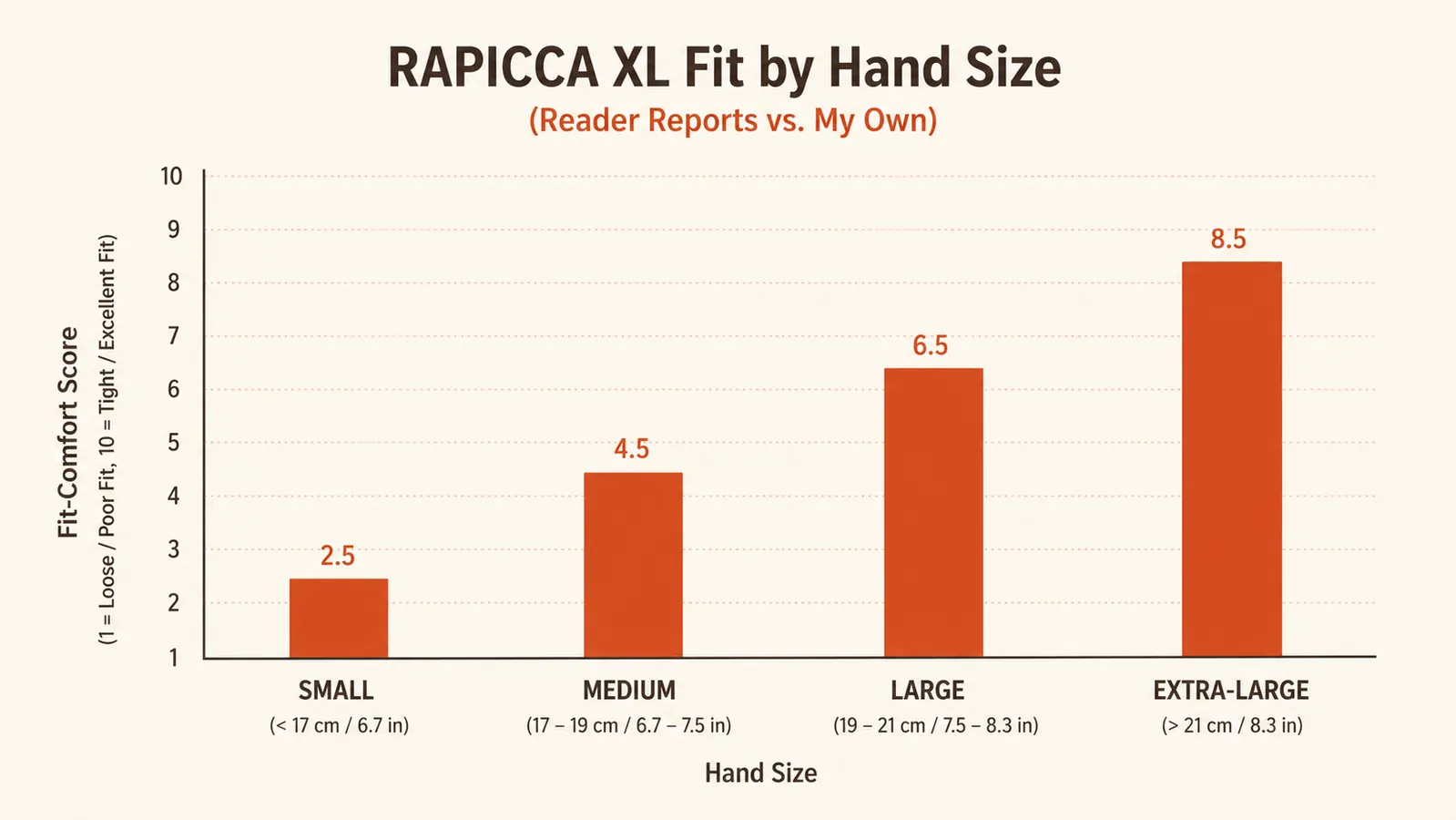
These are labeled XL and marketed as a 14-inch glove, and on my hand, which runs on the larger side, they fit with just enough room to make a fist comfortably without the fabric bunching up in my palm. That's the fit RAPICCA is clearly designing for. But when Diane tried mine on, since her gloves were in the wash, the fingers had noticeably more room at the tips than they should, and she said it felt like she was constantly at risk of the glove twisting slightly on her hand mid-task, which is exactly the kind of thing you don't want when you're holding something hot.
My brother-in-law, who's built like a linebacker with genuinely oversized hands, had almost the opposite problem. He could get the gloves on fine, but he said his fingers felt snug enough at the tips that he wouldn't want to wear them for a long cook, worried about circulation after twenty or thirty minutes. So the honest range here is that these fit a true large-to-XL hand well, they're workable but loose for a medium-sized hand like Diane's, and they're serviceable but snug for genuinely oversized hands like my brother-in-law's. There's no size chart variation offered, it's this one cut or nothing, which is worth knowing before you order rather than after.
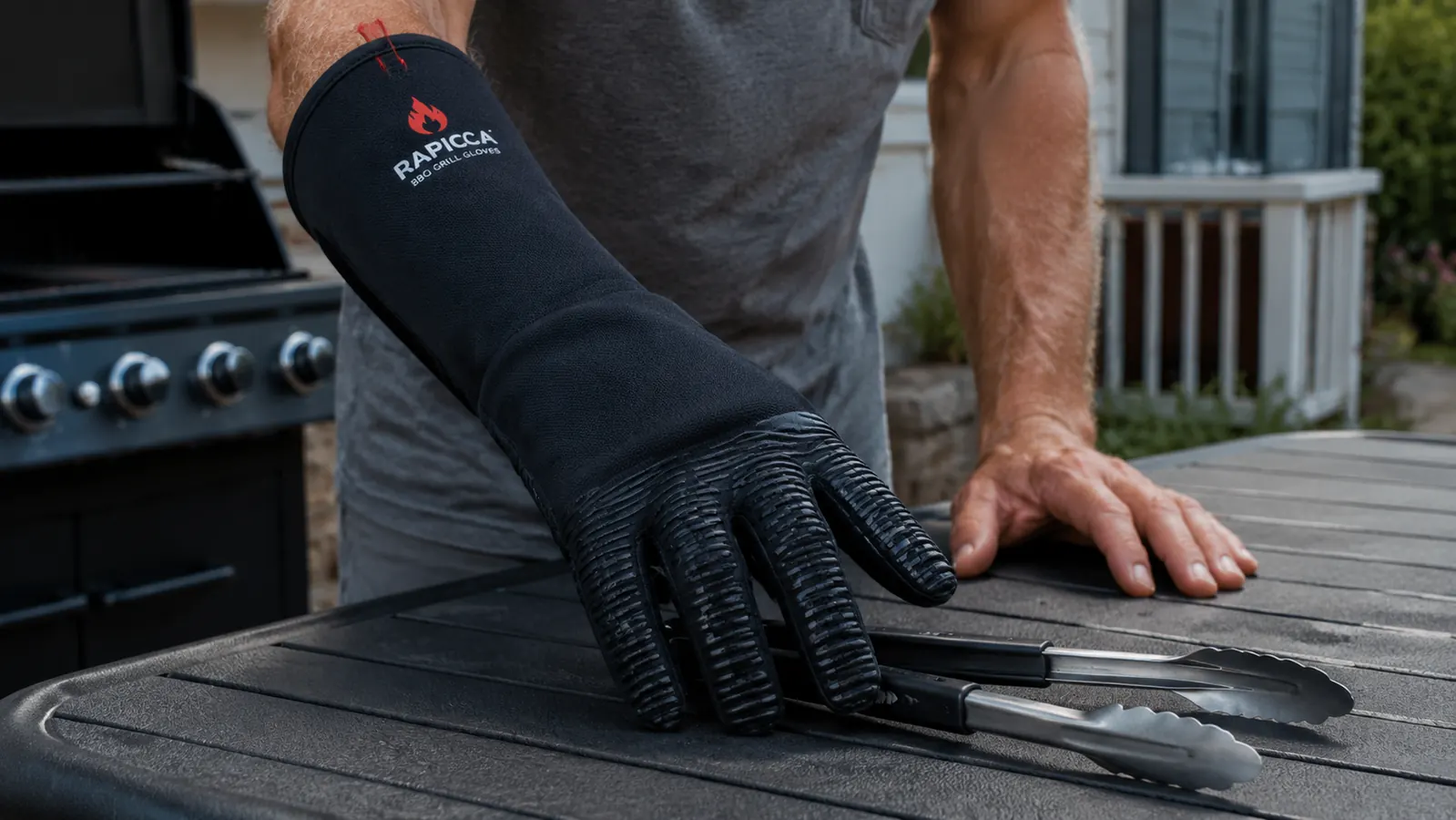
The length is the one part of the fit that works for basically everybody I tested it on. Whether the glove fit snug or loose through the fingers, the 14-inch coverage up the forearm was long enough on every hand it went on, mine, Diane's, and my brother-in-law's. If splash protection past the wrist is the main reason you're buying these, that part of the fit holds up regardless of hand size.
Waterproof, With an Asterisk
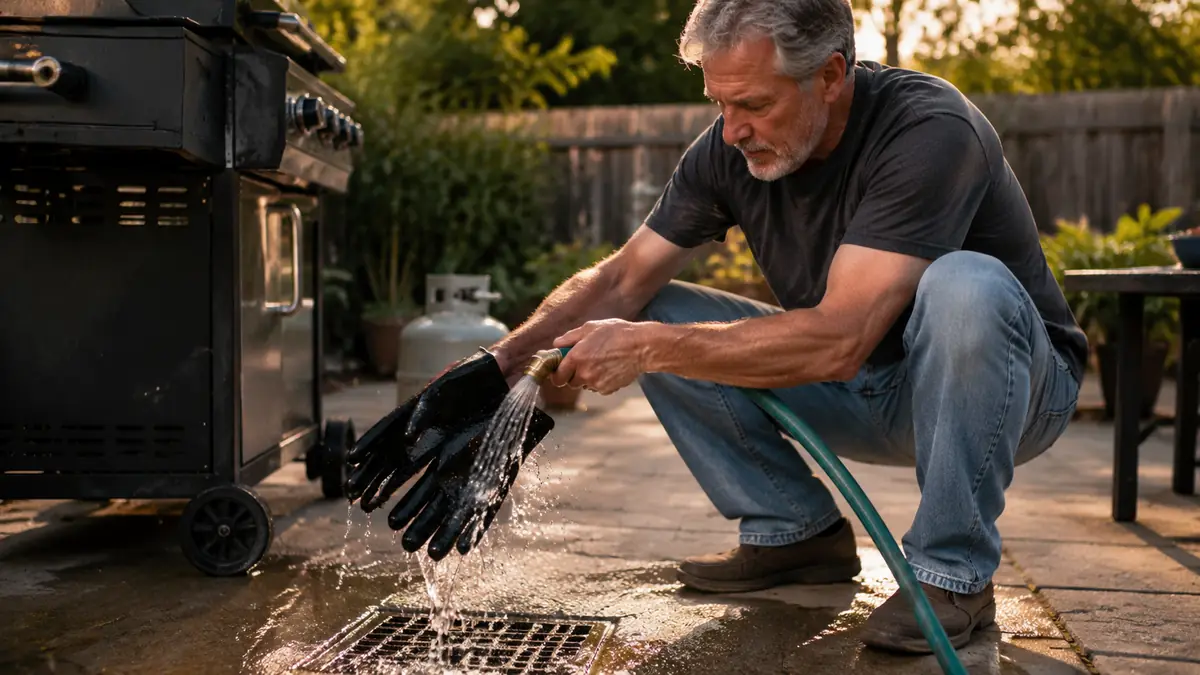
My first review mentioned that these held up fine in a couple of surprise rain showers, and that's true, water beads and rolls off the outer surface just like it's supposed to. What I didn't test back then, and what I think matters more for how people actually use these, is what happens when you hose them off directly instead of catching a passing drizzle. I gave mine a real rinse under the hose in the driveway after a particularly greasy rib session, running water over them for a solid twenty or thirty seconds the way you'd rinse a dirty tool.
The outer neoprene shrugged off the direct stream fine, no surprise there. But water did work its way in at the cuff opening, right where the glove is widest, and by the time I pulled them off my hand, the inside lining near the wrist was noticeably damp even though the palm and fingers stayed bone dry. That's not a defect, it's just physics, an open cuff is an open cuff, but it means waterproof on the label is really water-resistant everywhere except the one spot water is most likely to get in if you're actively rinsing or dunking the gloves rather than just standing in the rain wearing them.
In practical terms, that's a distinction that matters if you're the kind of griller who dunks gloves in a bucket of soapy water to clean them, or who works near a sink with wet hands a lot. For a rain shower or a stray splash off a turkey fryer, these have held up exactly as advertised. For anything involving submersion or a direct hose-down, plan on drying the inside cuff separately, or you'll be putting on a damp glove the next time you reach for them.
Where the Seams Actually Wear First
My earlier review flagged a crease forming at the wrist opening, which is still there and still just cosmetic. But since then, I've found a second wear spot that concerns me more, and it's one I haven't seen mentioned in any other review of these gloves. Right in the webbing between the thumb and index finger, where the fabric has to stretch every single time you grip something round like a spatula handle or a bottle of sauce, there's a small area where the stitching has started to pull slightly looser than the rest of the seam.
It's not torn, and it hasn't let any padding or lining show through yet, but I can feel a slight give there that isn't present anywhere else on the glove when I run my thumb over it. That spot takes more repeated stress than almost any other part of the glove, since basically every grip motion, tongs, a spatula, a hot pan handle, routes force through that exact webbing. If these gloves eventually fail on me, my honest bet is that's where it happens, not at the wrist crease that's easier to spot and photograph for a review.
I want to be fair here, this is normal wear for a working glove and not a sign these are falling apart. A pair of leather work gloves would show similar stress at that same joint. But if a company's marketing photos make it look like these will stay pristine forever, that's not realistic for any glove used as often as mine has been, and the thumb webbing is the part I'd check first if you want an honest read on how much life a pair has left in them.
The Smell, the Stiffness, and the Break-In Period
Nobody mentioned this to me before I bought mine, so I'll mention it to you. Straight out of the packaging, these gloves have a strong rubbery, chemical smell that took a good three or four days sitting out on the patio table to mostly fade. I wouldn't have wanted to use them straight out of the box near food without airing them out first, and if you're sensitive to that kind of smell, plan on letting them sit outside for a few days before your first cookout rather than trying to use them the same afternoon they arrive.
They're also stiffer new than they end up being after regular use. My first few times wearing them, closing my hand into a full fist took a bit more effort than it does now, and picking up something small like a meat thermometer probe felt clumsier than it does today after a season of flexing the material. That break-in period settled in faster than I expected, maybe two or three weeks of regular use, but it's worth knowing going in that the glove you unbox isn't quite as flexible as the glove you'll be wearing a month later.
Is the Price Actually Worth It
I've now used these gloves more than seventy times by my rough count, everything from Sunday smokes to that turkey fry to plain old weeknight grilling, and broken down by use, the cost per cookout is honestly pretty small at this point. That's the argument in favor of spending real money on a pair of grill gloves instead of grabbing the cheapest pair at the hardware store. A five-dollar pair of thin cotton mitts might get you through a season, but you'll replace them every year, and they won't protect you the way these have on the handful of times it actually mattered, like that turkey fryer splash.
That said, I don't think these are automatically worth it for everybody at this price point. If you grill a handful of times a summer and your hottest job is flipping burgers on a gas grill, you're paying for heat protection and durability you're probably never going to need. The value case here is strongest for people who smoke regularly, deep fry, or handle cast iron often enough that a thin mitt has already let them down once. If that's not you, a cheaper pair will likely serve you fine, and you can put the difference toward something else for the grill cart.
What We Liked
- Genuinely handles high heat from cast iron, hot racks and fryer splashes without the marketing hype falling apart in practice
- 14-inch length protects past the wrist regardless of hand size
- Cost per use is low if you're grilling, smoking or frying regularly
- Break-in period is short, two to three weeks of use before the stiffness works out
- Holds up fine to rain and light splashes exactly as advertised
Where It Falls Short
- One-size XL fit runs loose on medium hands and snug on truly oversized hands, no size chart alternative
- Waterproof claim has a real limit at the open cuff during a direct rinse or dunk
- Thumb webbing seam shows early wear that no other review I've read mentions
- Strong rubbery smell out of the box that needs a few days to air out
- Not worth the money if you only grill occasionally on low, easy heat
A five-star review tells you a product worked. An honest one tells you where it didn't, and for these gloves, that's the fit chart nobody printed and the seam nobody photographed.
Who This Is For
If you've got a large to extra-large hand, cook often enough to make the cost per use low, and you're regularly handling real heat, cast iron, smoker racks, a turkey fryer, these gloves are a smart, honest buy. The 14-inch coverage and true heat protection are worth having once you've had one close call with a thinner mitt, and I'd rather have a friend spend the money here than find out the hard way that a five-dollar oven mitt wasn't enough.
Who Should Skip It
If you've got smaller or medium-sized hands and dexterity matters more to you than raw heat protection, the loose fit through the fingers is going to bother you more than the heat rating will impress you. And if your grilling is occasional and low-heat, gas burgers a few times a summer, you're better off with a cheaper mitt and saving the difference, because you'll likely never push these gloves anywhere near the limits that make the extra cost worth it.
Know the fit and the wear points before you order, not after.
If your hands run large and you're handling real heat on a regular basis, the RAPICCA 932°F gloves are worth the money. Check the current listing for today's price, sizing details, and availability before you decide.
Amazon Check Today's Price on Amazon →