
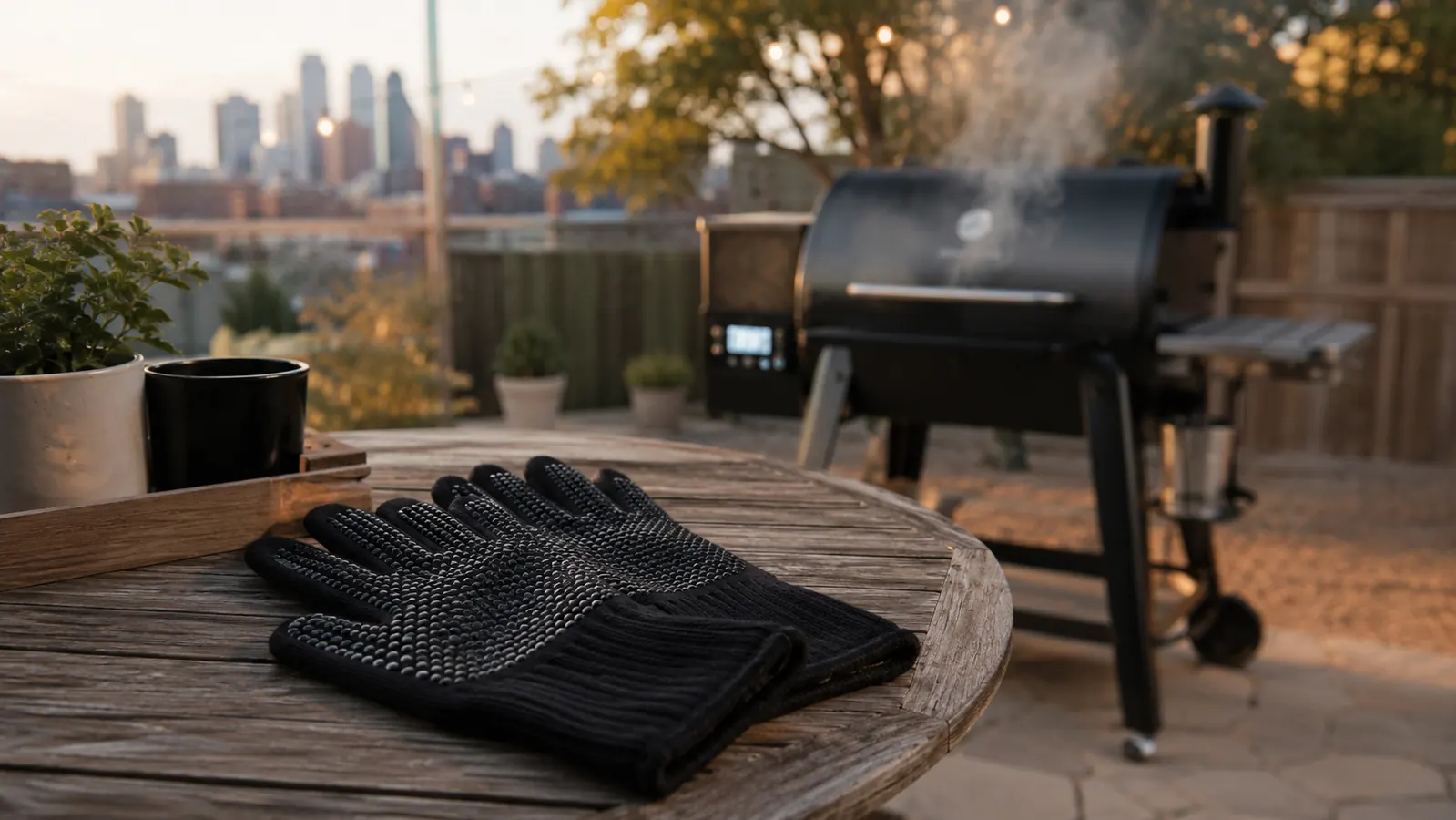
I bought my first pair of RAPICCA grill gloves last spring after I ruined a perfectly good oven mitt pulling a pork butt off the Pit Boss and singed two knuckles doing it anyway. Thirty-some years standing over fire here in Kansas City and you'd think I'd have graduated past cheap cotton mitts a long time ago, but real grill gloves always felt like something you bought somebody else for Christmas, not something you actually needed yourself. Diane finally put her foot down after she watched me shake a hot rack of ribs loose because a pair of tongs and a thin mitt weren't cutting it anymore, and she ordered the RAPICCA 932°F gloves off Amazon before I could talk her out of it.
A full grilling season later, from that first nervous turkey fry with Eli standing back a safe ten feet, through more Sunday pork butts and Fourth of July rib racks than I can count, I've got a real answer on whether these gloves earn a permanent spot on my grill cart or whether they're just another gadget that ends up buried in the junk drawer by August. This isn't a review written the week they showed up in the box. I've worn these things pulling briskets off the Pit Boss, moving a red-hot cast iron skillet off the Weber kettle, and holding a whole turkey steady over a pot of 350-degree oil, and they've earned their keep in every one of those jobs.
The Quick Verdict
A genuinely tough pair of heat-resistant gloves that held up through a full season of hot racks, cast iron and one deep-fried turkey, with grip that stayed solid through grease and rain, though the fit runs bulkier than I expected for fine detail work.
Amazon Check Today's Price →Tired of shaking a hot rack loose because your hand can't take the heat?
The RAPICCA gloves are rated to 932°F and run a full 14 inches to cover past your wrist, so you can pull a rack of ribs or a hot cast iron skillet off the grill without flinching or dropping it. Here's the current listing so you can check today's price and availability.
Amazon Check Today's Price on Amazon →How I've Used Them
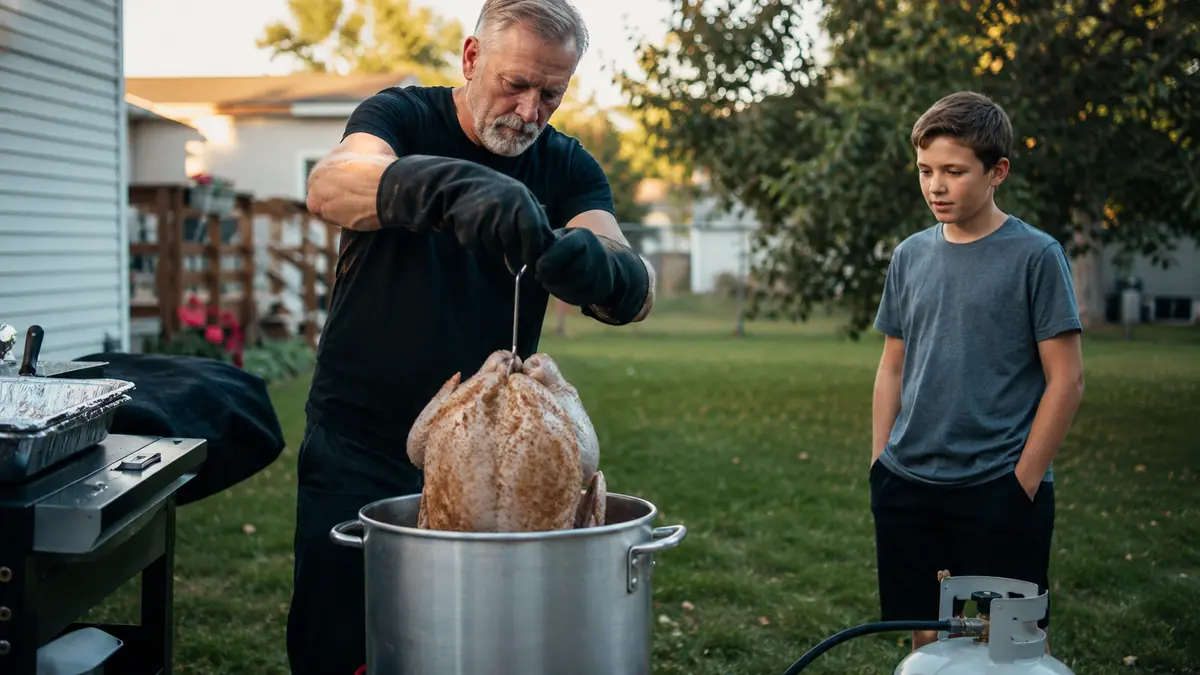
The first real test came about a week after they arrived, when Diane's brother came through town and I decided to deep fry a turkey for the first time in about six years. I'd forgotten how nerve-racking it is lowering fourteen pounds of bird into a pot of oil that hot, and my old leather gloves from that era had gone stiff and cracked in the garage. The RAPICCA gloves went past my wrist a good three or four inches, which meant no gap for a stray splash of oil to find skin, and Eli stood back by the fence taking pictures on his mom's phone instead of standing right next to me the way he usually does when I'm at the grill.
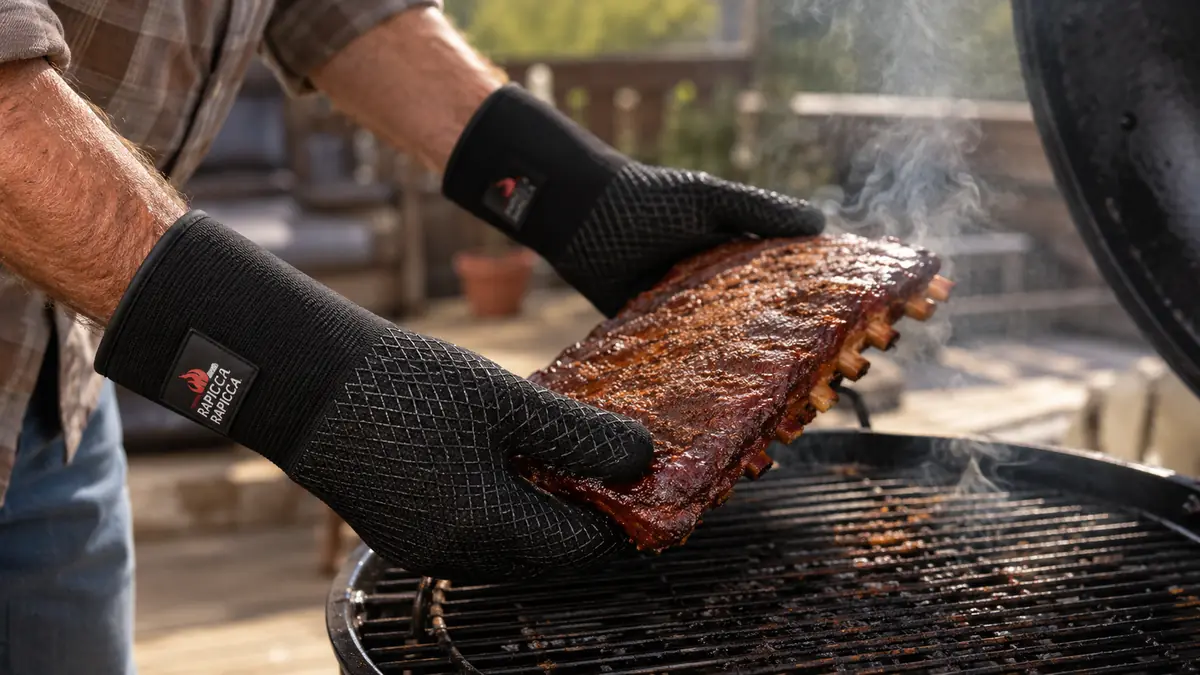
Since that turkey, these gloves have become part of my regular rotation alongside my grill tools, not something I dig out for special occasions. I'd guess I've reached for them fifty or sixty times over the season, everything from pulling a full rack of ribs off the Pit Boss on a Sunday to grabbing a cast iron skillet straight off the Weber kettle's coals when I'm searing a couple of steaks for Diane and me on a Tuesday night. The five-finger design is the thing that sold me over a set of oven mitts, because I can still pick up a single rib bone or adjust a foil pack without pulling the glove off, which a bulky mitt never let me do.
I've also used them for jobs that aren't strictly about heat. The neoprene held up fine when I used them to hold a basting mop and dab sauce on a rack of ribs without the brush handle getting slippery, and they've handled greasy hands from flipping burgers just as well as they've handled a pot lid straight off a simmering pan of baked beans. That range is what's kept them out on the grill cart instead of getting tossed back in a drawer between cookouts.
How Much Heat They Actually Hold
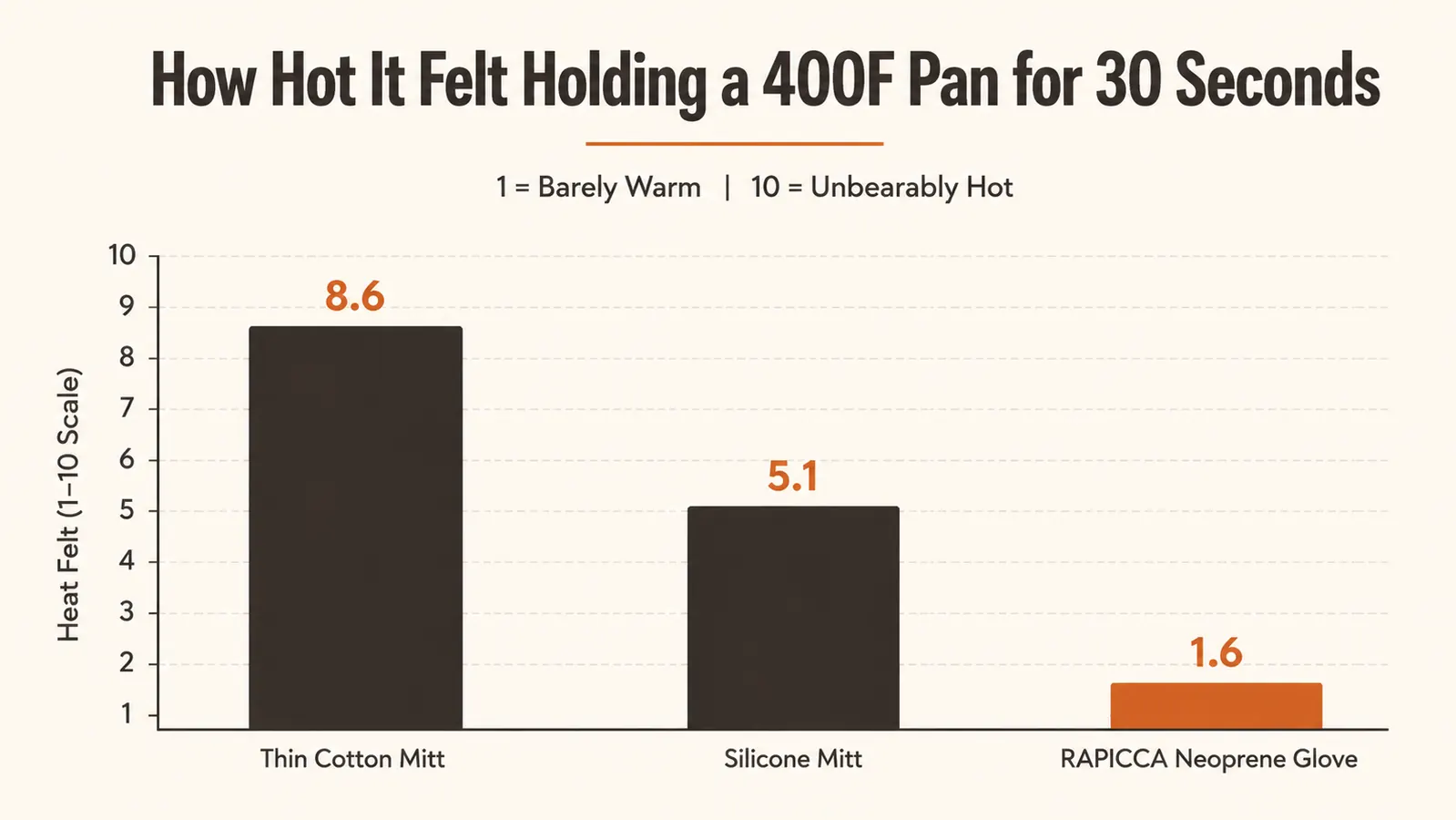
The 932°F rating on the box is the kind of number that sounds impressive until you actually need it, so I made a point of testing these gloves against the hottest things I regularly deal with rather than just taking the label's word for it. I held a cast iron skillet straight off the Weber's hottest coals for a good fifteen seconds one evening, longer than I'd normally need to, and felt nothing but a mild warmth through the glove. That's a noticeable step up from the thin cotton mitt I used to keep by the grill, which I could feel getting hot through the fabric in under five seconds on the same skillet.
The turkey fryer gave me the real stress test, since 350-degree oil splashing is a different kind of heat than a dry skillet. I had a small splash land right on the back of my glove while lowering the bird in, and I honestly didn't feel it until I looked down afterward and saw the oil bead up and roll off rather than soak through. That's the moment I trusted these gloves for good, because a bad splash from a turkey fryer is exactly the kind of thing that sends people to the emergency room, and these held up without me even flinching.
The one spot where I noticed real heat was near the flame broiler tray on the Pit Boss, which opens up for direct-flame searing and runs hotter than the regular grate. Holding my hand close to that opening for more than a few seconds, I could feel warmth building through the glove faster than anywhere else I tested. It never got to the point of being unsafe, but it told me these gloves are built for handling hot metal and hot food, not for holding your hand directly over open flame for extended periods, which is a fair limit for what's still a fabric glove and not a fireplace tool.
Grip and Handling Through a Season of Grease and Rain
The textured silicone on the palms and fingers is what makes these usable for actual cooking tasks instead of just moving hot pans from point A to point B. I've pulled a full rack of ribs straight off the grate, bones and all, and never had them slip out of my grip the way they did with my old cotton mitts, which turned slick the second any grease got on them. Handling a whole raw chicken before it goes on the grill, slick with oil and seasoning, is another job where the grip made a real difference over a bare hand or a plain mitt.
Diane will tell you I don't check the weather before I fire up the grill, and that caught up with me a couple of times over the season with a surprise Kansas City rain shower rolling in mid-cook. The waterproof claim on these held up both times, water beaded on the surface and rolled off rather than soaking into the neoprene, and my hands stayed dry enough that I never lost my grip on a hot pan or a rack of ribs while I hustled everything under the patio cover.
The grip hasn't degraded much that I can tell after a full season of use. There's a little bit of flattening on the silicone texture right at the fingertips, which is where I do most of my gripping and pinching, but it hasn't affected how well I can hold onto anything yet. I'd expect that spot to be the first place that eventually wears smooth if I keep using them at this pace, but I'm not there yet after one season.
Durability: What's Held Up and What's Started to Show Wear
The stitching along the seams has held up better than I expected for a glove that's been through fifty-plus uses, a turkey fryer, a dishwasher mishap that Diane will deny suggesting, and more than a few tosses onto the concrete patio when my hands were full. I checked the finger seams closely a few weeks ago looking for the kind of fraying I've seen on cheaper gloves, and there's nothing coming loose yet, just a little bit of the black color fading to a slightly duller gray near the knuckles where the fabric flexes most.
The one real wear spot is right at the wrist opening, where the fabric folds every time I pull the gloves on and off. There's a faint crease line there now that wasn't there when they were new, and I can see the neoprene starting to look a touch thinner in that exact spot compared to the rest of the glove. It hasn't torn or cracked, but if I had to guess where these gloves would eventually fail after a couple more seasons, that's the spot I'd watch.
As for cleaning, I've mostly wiped these down with a damp rag after greasy jobs and let them air dry on the grill cart overnight, which has kept them from holding onto smells the way I worried a fabric glove might. I did run them through a gentle cycle in the washing machine once mid-summer after a particularly messy rib session, and they came out fine, no shrinking or stiffening that I could feel, though I wouldn't make that a habit given how the wrist crease is already showing a little wear.
What I Considered Before These
Before settling on the RAPICCA gloves, I looked at a couple other heat-resistant options online, including some leather welding-style gloves a buddy of mine swears by for his smoker. Leather holds up to heat fine, but it doesn't handle grease or rain the way these neoprene gloves do, and it takes forever to dry out if it gets wet, which matters more than I expected given how often a Kansas City afternoon can turn on you without warning.
I also thought about just sticking with a couple of silicone oven mitts, since that's what I'd used for years without much complaint. What changed my mind was the five-finger design and the extra length past the wrist, both things a mitt just can't offer. Being able to pinch a single piece of foil or adjust a thermometer probe without pulling a glove off entirely turned out to matter a lot more in daily use than I expected it to when I was just reading the product listing.
What We Liked
- Held up to a cast iron skillet straight off hot coals with only mild warmth felt through the glove
- Handled an oil splash from a turkey fryer without soaking through or burning skin
- Textured silicone grip stayed solid on greasy racks and slick raw chicken all season
- Waterproof claim held up through two surprise rain showers mid-cook
- Five-finger design let me handle small tasks without pulling the gloves off
- 14-inch length covered well past the wrist for real splash protection
Where It Falls Short
- Warmth built up faster than expected when held close to the flame broiler's direct-flame opening
- A visible wear crease has started forming at the wrist fold after a season of daily use
- Bulkier fit than a thin mitt makes truly fine detail work, like plating small garnishes, a little clumsy
- Fingertip grip texture has flattened slightly from repeated gripping and pinching
Eli asked if the gloves were 'lava proof' while I lowered that turkey into the fryer. I told him they're not quite lava proof, but they're the first gloves I've owned that let me stop flinching.
Who This Is For
If you're still using a thin oven mitt or bare tongs to handle hot racks, cast iron, or a turkey fryer, these gloves solve a real safety gap most backyard grillers put off fixing until something goes wrong. They're also worth it if you want one pair of gloves that can handle a Sunday smoke, a quick weeknight sear, and the occasional deep fry without switching equipment for each job, which is exactly how I've used mine this season.
Who Should Skip It
If most of your cooking is quick weeknight jobs on a gas grill where you're barely handling anything hotter than flipping a burger with tongs, a lighter, cheaper mitt is probably enough for you. And if you do a lot of fine plating or delicate kitchen work with your gloves on, the bulk of these will slow you down more than a thinner option would, the same way I've noticed them getting in the way when I'm doing something finicky like trimming fat off a brisket instead of just hauling it around.
A full season in, these are still the gloves I reach for first.
If you're tired of flinching every time you pull something hot off the grill, the RAPICCA 932°F gloves give you real heat protection with a grip that actually holds up to grease and rain. Check the current listing for today's price and availability.
Amazon Check Today's Price on Amazon →