
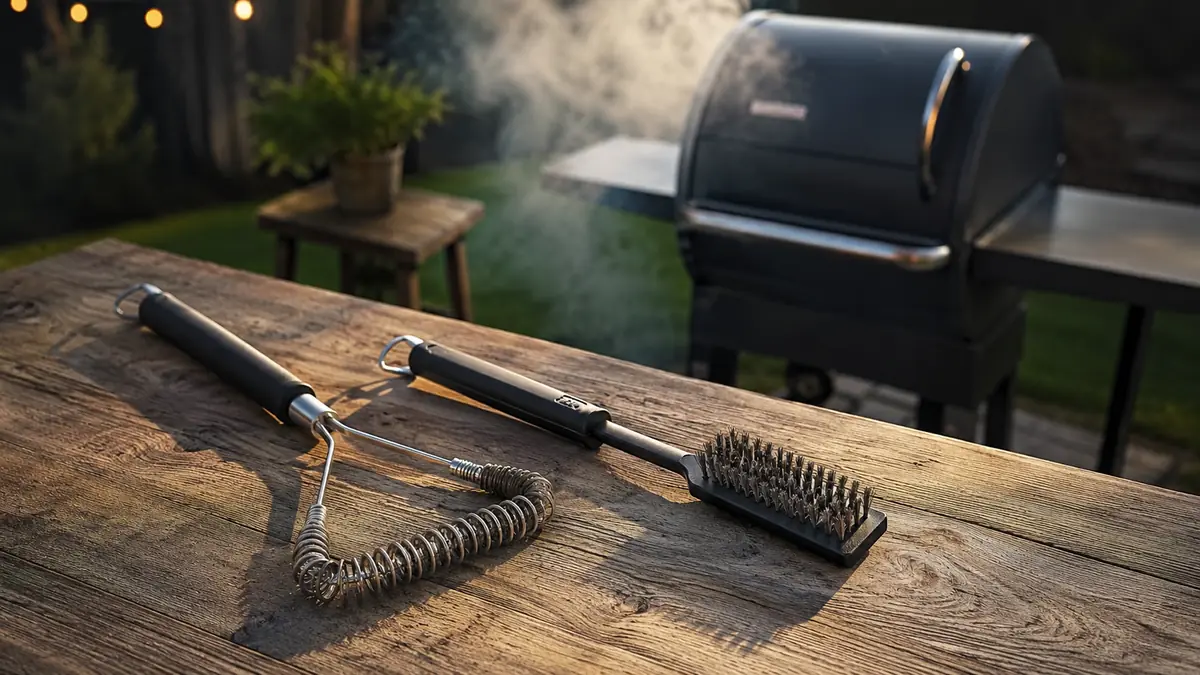
If you want the short answer before I get into all thirty years of grease and grate scars, here it is. I clean my grates with a bristle-free brush now, specifically the Weetiee stainless scraper, and I haven't touched a wire bristle brush on purpose in about four years. Not because wire brushes don't clean well, they do, but because of something that happened at a cookout two summers ago that I'll get to in a minute. I ran both tools side by side this past season, the Weetiee bristle-free brush and a classic wire bristle brush like the one I used for twenty-some years before that, on the same grates, the same cookouts, the Pit Boss pellet grill and the 22-inch Weber kettle I've had since Eli was in diapers. Both will get your grates clean. They are not the same tool once you look past the first pass, and the difference matters more than most guys think until it doesn't.
Here's what got me thinking hard about this in the first place. Back in the summer of 2023, my neighbor Ron's boy bit down on something hard in his burger at a block party and it turned out to be a wire bristle, snapped clean off a brush and left sitting on the grate from the last cleaning. Nobody got seriously hurt, but it scared the whole street straight, and it sent me down a rabbit hole reading about how often this actually happens. Turns out it's common enough that emergency rooms see it every grilling season, and that's what pushed me to try a bristle-free option instead of just shrugging it off. Diane still brings that story up every time she sees somebody using an old wire brush at a cookout, and honestly, so do I now.
| Bristle-Free Grill Brush | Wire Brush | |
|---|---|---|
| Price | Weetiee Bristle-Free Brush, around $18.64 (check today's price) | Classic wire bristle brush, around $12.99 |
| Cleaning Design | 18-inch stainless coil scraper with a flat scraper edge, no loose bristles anywhere | Twisted steel wire bristles bound into rows on a metal head |
| Loose-Bristle Risk | None. Nothing to snap off and land in your food | Bristles bend, fatigue and can break off into food or ash catcher over time |
| Grate Compatibility | Safe on porcelain-coated, stainless, cast iron and charcoal grates | Can scratch porcelain coating, best limited to bare cast iron or stainless |
| Cleaning Power on Baked-On Grease | Strong on grease and light char, needs two or three passes on heavy buildup | Very strong, cuts through heavy carbon buildup in one or two passes |
| Handle Length | 18 inches, keeps your hand well clear of the heat | Typically 16 to 18 inches depending on the brand |
| Durability | Stainless coil doesn't fray or shed, held up all season with no visible wear | Bristles flatten and shed within a season or two of regular use |
| Cleanup and Care | Rinses clean, dishwasher safe, no bristles to trap grease | Grease and carbon build up between the bristle rows over time |
Where the Weetiee Bristle-Free Brush Wins
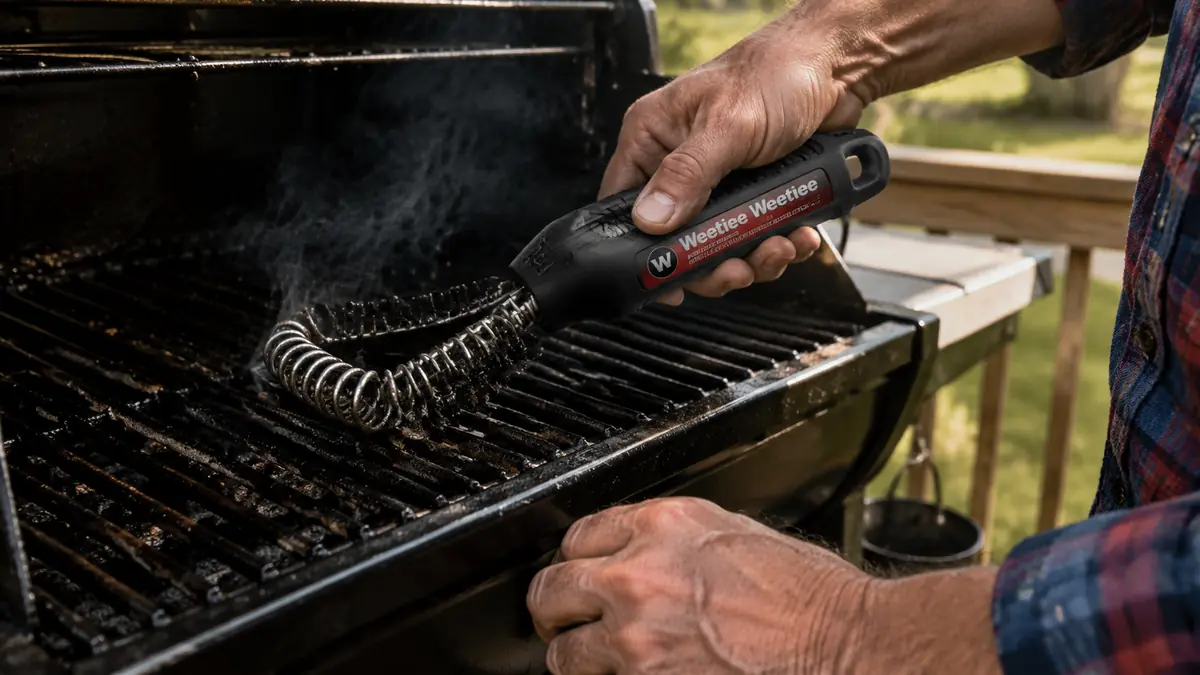
The whole reason I switched is right there in the name. There's nothing on this brush that can break off and end up in a burger. It's an 18-inch stainless steel handle with a coiled scraper head and a flat scraper edge on the end, so you're cleaning with solid metal instead of a hundred individual bent wires that are only as strong as the weld holding them in. I've run this thing hard on the Pit Boss after a long rib cook where the grates had a real crust built up, and it takes two or three passes instead of one clean swipe, but it gets there. On the Weber kettle, where I'm usually just clearing off light char before burgers, one pass does it most of the time. Eli's old enough now that I let him scrape the grates before we fire up on a Saturday, and I don't have to stand over him worried about a stray bristle the way I would with the old brush.
It's also safe on surfaces I used to baby with the wire brush. Our neighbor's gas grill has porcelain-coated grates, and I helped him clean them with the Weetiee brush last month without putting a single scratch mark in the coating, something I never would have risked with wire bristles digging in. The coil design flexes into the gaps between grates a little better than I expected too, working carbon out of the corners where a flat wire pad tends to just skate over the top. After a full season of weekly use, the coil hasn't frayed, hasn't shed a single strand, and still scrapes like it did the day I unboxed it. That's the part that sold me on keeping it around for good, not just the safety angle.
Where a Wire Bristle Brush Wins
I'm not going to pretend wire brushes are useless, because they aren't, and I used one for over two decades without a single problem before that block party story changed my mind. On heavy, baked-on carbon, like grates that sat outside all winter uncovered or a smoker box nobody scraped down in months, a fresh wire brush cuts through that mess faster than almost anything else I've tried. The stiff bristles get into tight grate gaps and knock loose crust off in one or two hard passes where the bristle-free coil needs a few extra strokes to do the same job. If you're dealing with genuinely neglected grates, a wire brush with fresh bristles is still the fastest tool for that specific rescue job.
Price is the other honest edge. A basic wire bristle brush runs a few dollars less than the Weetiee, and if you're the type who tosses your grill brush every season anyway and doesn't mind replacing it regularly, that lower cost adds up over the years. Some guys also just prefer the feel of stiff bristles flexing into the grate versus a solid coil, especially on cast iron grates where there's no coating to worry about scratching. If you inspect your brush before every use, replace it the moment bristles start bending or loosening, and you're only ever cleaning bare cast iron or stainless, a wire brush can be used safely for a long time. That's a real if, though, and it's the one most guys skip.
The brush I actually trust near food now
After a full season running both side by side on my Pit Boss and my Weber kettle, the Weetiee bristle-free brush is the one hanging by my grill. No loose wires, no worrying, just a clean scrape every time.
Amazon Check Today's Price on Amazon →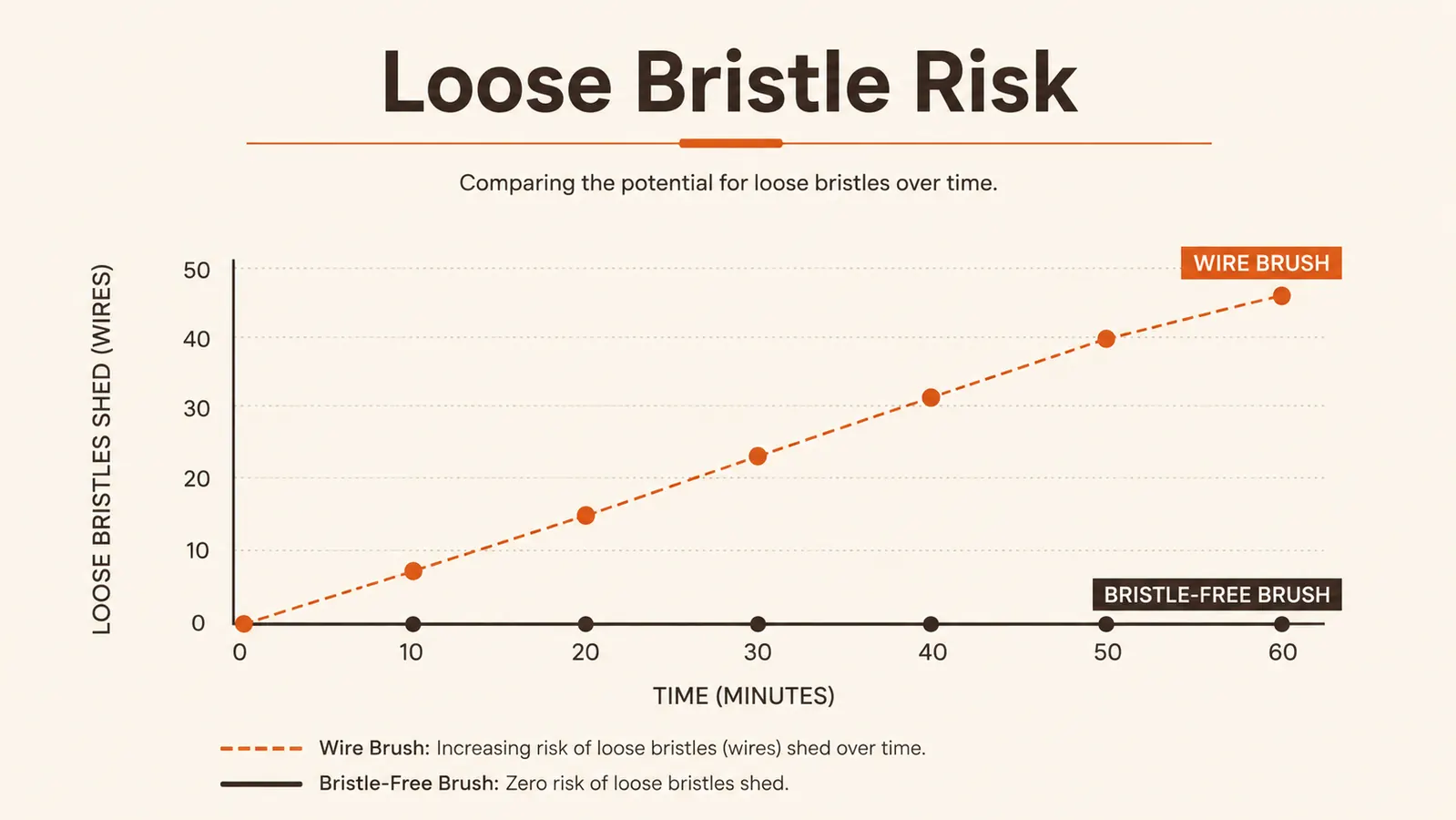
The Bristle Risk Nobody Talks About
Here's the part that doesn't show up on the packaging of most wire brushes. Every time you scrape a wire brush across hot metal grates, you're bending those bristles back and forth under heat, and metal that gets bent repeatedly under stress eventually fatigues and snaps. It doesn't take a brand-new brush doing this, it takes a brush that's been used for a season or two, exactly the kind most guys keep hanging by the grill because it still looks fine from a few feet away. A snapped bristle is thin, dark from carbon buildup, and about the size of a splinter. It doesn't look like much sitting on a grate next to char marks, which is exactly why it's easy to miss before you close the lid and start cooking dinner on top of it.
A snapped wire bristle doesn't look like much on a grate covered in char marks, and that's exactly the problem. You don't find out it was there until it's already on somebody's plate.
I looked into this more after Ron's boy got hurt, and it's not some rare fluke story, it's common enough that it shows up in emergency medicine journals as a recurring seasonal injury, right alongside grease fire burns. A swallowed wire bristle can lodge in the throat, the esophagus, even work its way into the intestines before anyone realizes what happened, because by the time it's a problem you already ate it. That's what pushed me to switch, not because a wire brush is a bad tool, but because the risk is invisible until it isn't, and there's a bristle-free option now that does the same job without that risk sitting on the table. I still run a magnet and a bright flashlight over any grates I'm not sure about before I cook, old habit that isn't going anywhere, but I don't have to do that dance with the Weetiee brush at all.
How I Store and Inspect Mine
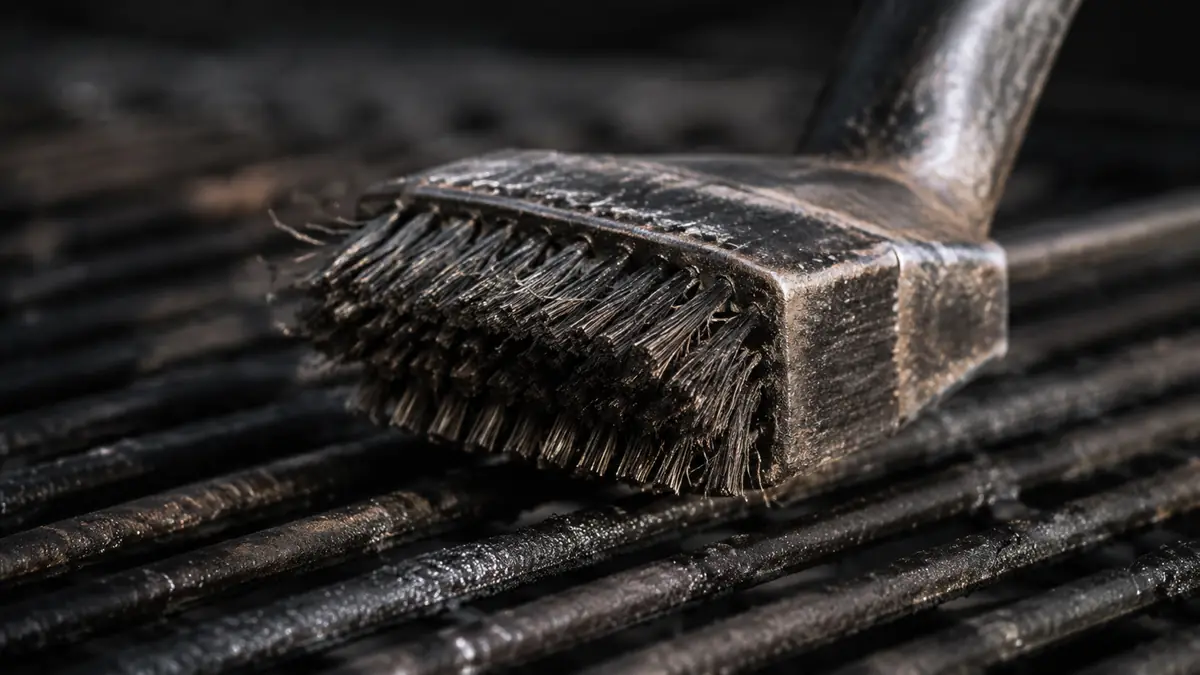
This part matters more than people think, and it's part of why I ended up preferring the bristle-free brush for everyday use even beyond the safety angle. My old wire brush used to hang on a nail by the back door, exposed to Kansas City humidity all summer, and I'd notice rust creeping into the base of the bristles by midsummer most years. Rust plus bent bristles is a bad combination, because rusted metal fatigues faster and snaps off easier than clean steel does. The Weetiee brush hangs on the same nail now, but stainless doesn't rust the same way, and there's no bristle base for moisture to sit in and work on. I still hose it off after a greasy cook and let it air dry before I hang it back up, same as I always did, but I'm not inspecting it under a flashlight before every single use the way I used to with the wire brush.
I've also started teaching Eli the difference between the two tools when he helps me get the grill ready, mostly because I want him to understand why we switched, not just that we did. He's twelve now and starting to ask good questions about how things actually work, and showing him a bent bristle under a magnifying glass next to a clean stainless coil does more to explain the risk than any lecture would. Diane jokes that I've turned grate cleaning into a safety seminar, but after what happened to Ron's boy, I don't mind being the guy who's a little overly careful about it. It's a five-dollar difference in most cases and a habit that takes thirty extra seconds, and that's a trade I'll make every single time now.

Who Should Buy Which
If you're buying one grill brush and you want to stop thinking about it, get the bristle-free one. That's what I hand Eli now when he wants to help me get the grates ready, because I don't have to inspect it before every use or worry about what might be sitting on the grate when I close the lid. If your grates are in genuinely rough shape from months of neglect and you need one hard cleaning to get them back to bare metal, a fresh wire brush will get there faster, just plan to inspect the grates carefully afterward and consider switching to something bristle-free for regular upkeep once they're clean. For most backyard cooks running a weekly cookout schedule on a pellet grill or a kettle, the Weetiee brush is the one I'd tell a buddy to buy first, and it's the one that's stayed hanging by my Pit Boss since the day I opened it.
Ready to stop worrying about what's on the grate?
Get the same bristle-free brush I've used all season on my Pit Boss and my Weber kettle. No loose wires, no guessing, just clean grates before every cookout.
Amazon Check Today's Price on Amazon →